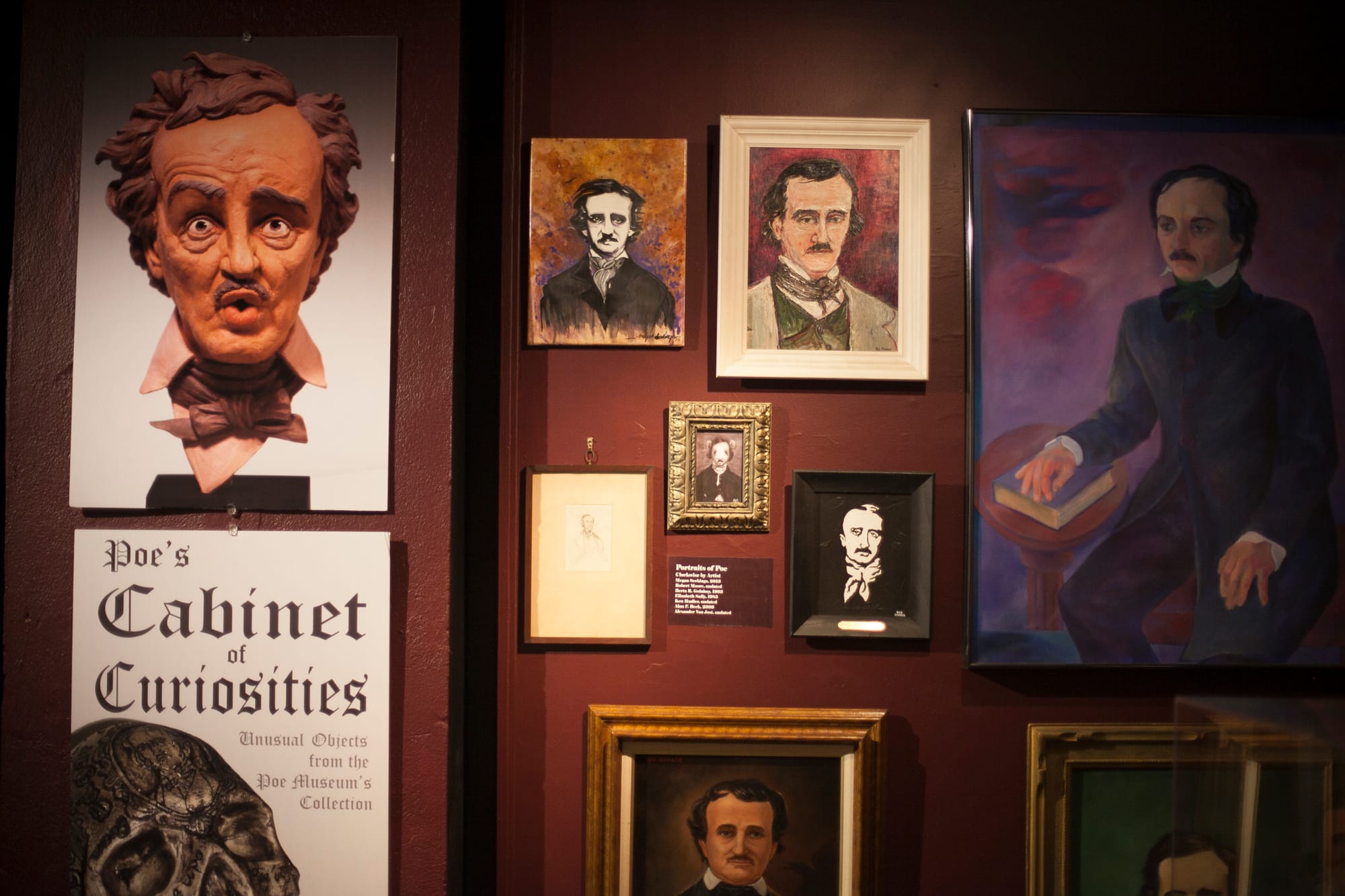
A Poe-werful Legacy: The Poe Museum in Richmond
A black cat named Edgar often greets visitors at the Poe Museum in Richmond, Virginia, sometimes with his companion, Tib. The tradition began in 2012, when staff found three kittens in the museum’s garden and cared for them. Today, visitors may spot the cats wandering the grounds or follow them on Instagram at @poemuseumcats.
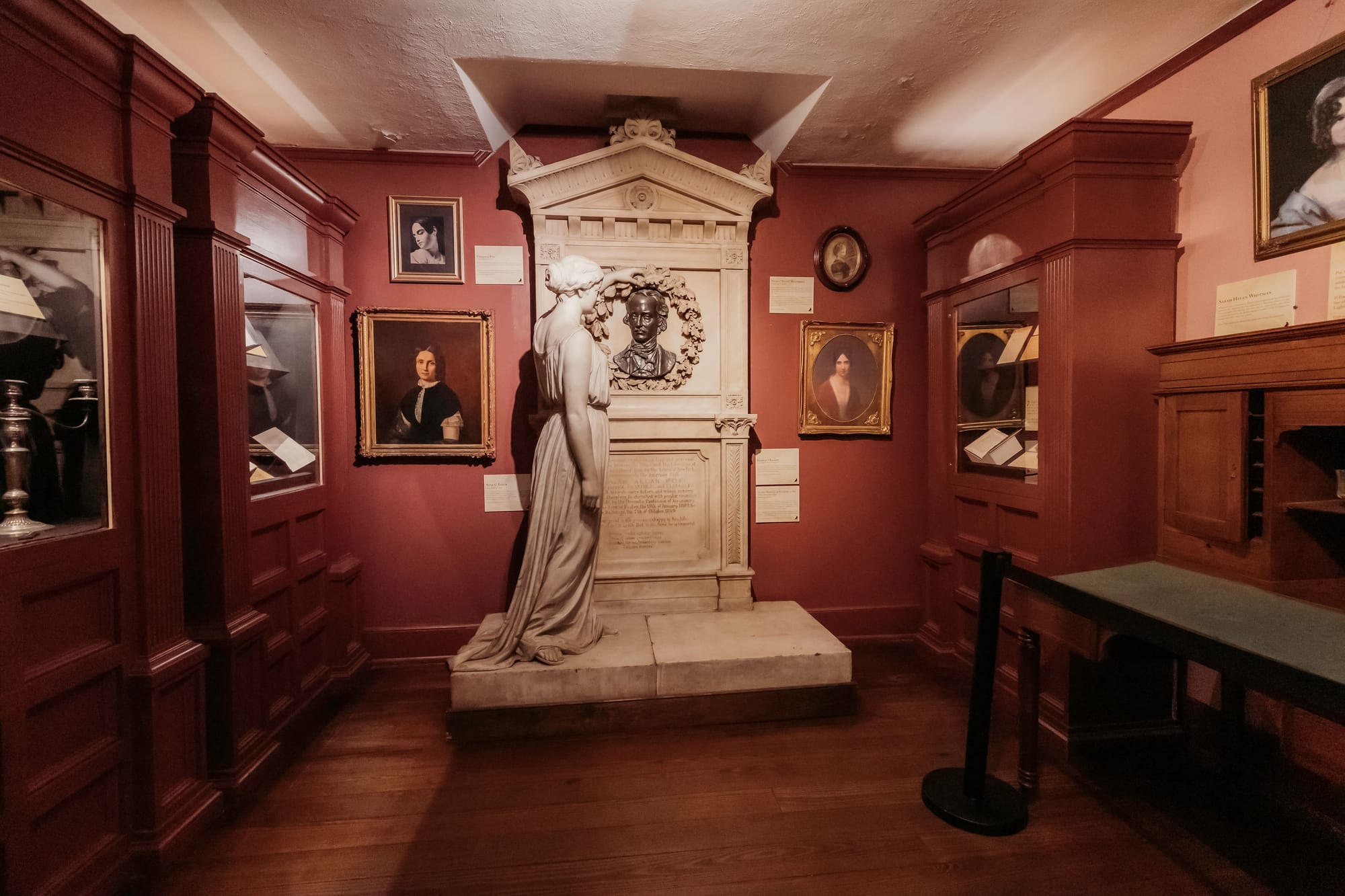
Beyond its feline residents, the Poe Museum houses the world’s largest collection of Edgar Allan Poe artifacts and memorabilia. Spread across several historic buildings linked to Poe’s life in Richmond, the collection includes his childhood bed, pocket watch, rare manuscripts, and a fragment from his coffin. These objects illuminate the life of the writer who invented the modern detective story and transformed horror fiction through psychological terror.
Poe’s Richmond Story
Edgar Poe was born in Boston on January 19, 1809, to traveling actors. His father abandoned the family when Edgar was an infant, and his mother, Eliza, died of tuberculosis in Richmond when he was two years old. Local merchant John Allan and his wife, Frances, took him in, though they never formally adopted him. They added their surname to his, making him Edgar Allan Poe, and raised him among Richmond’s elite despite his working-class origins.
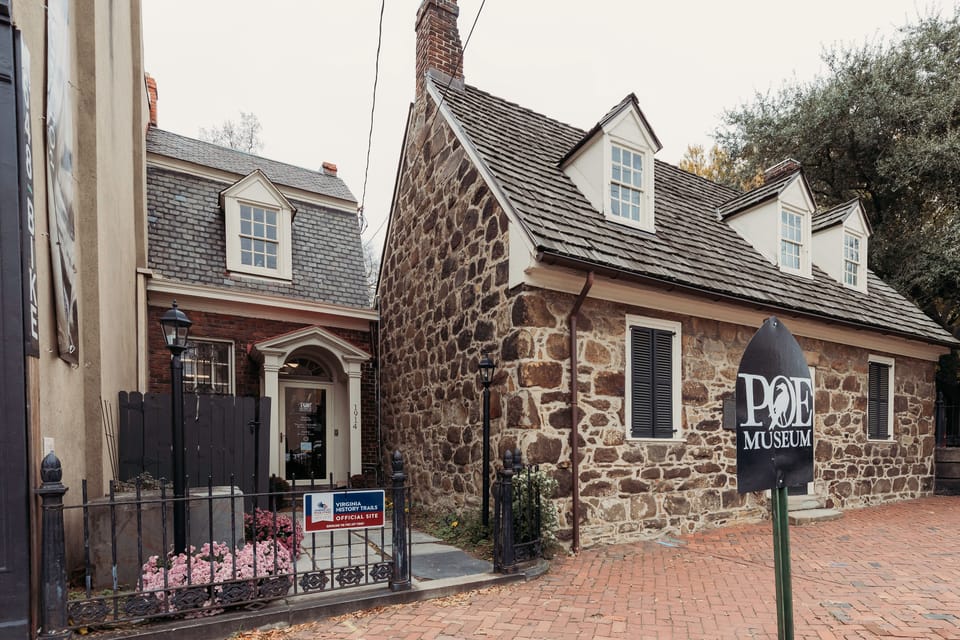
At fifteen, Poe served in a junior honor guard escorting Revolutionary War hero Marquis de Lafayette through Richmond. The procession stopped at the Old Stone House, home of the Ege family, who had aided Lafayette’s forces during the war. Poe stood watch on the front steps of that building—one that would later become the heart of the Poe Museum.
Poe enrolled at the University of Virginia at seventeen with just $110. Tuition cost three times that amount, and to cover the difference, he gambled, only to accumulate about $2,000 in debt. He left school after a few months and struggled for several years before finding opportunity in Richmond at the Southern Literary Messenger, which first published his work and then hired him as an editor. While working at the magazine in 1836, Poe married his cousin, Virginia Clemm.
Poe’s most productive creative period came in the late 1830s and 1840s while living in Philadelphia. During these years, he wrote some of his most enduring works, including “The Tell-Tale Heart,” “The Fall of the House of Usher,” and “The Murders in the Rue Morgue.” The last is widely recognized as the first modern detective story, introducing the brilliant and eccentric C. Auguste Dupin—a character who would later inspire fictional sleuths such as Sherlock Holmes.
Although Poe experimented with early science fiction and wrote several comedies, it was his exploration of psychological horror that cemented his reputation. His stories revealed how ordinary people could commit terrible acts when consumed by guilt, obsession, or fear.
“The Raven” made Poe a household name when it was published in early 1845. Though he earned only $15 from the poem, its international success led to lecture invitations and literary consulting work. By then, however, Virginia had begun showing symptoms of tuberculosis. She died in 1847 at age 24, the same age as Poe’s mother at her death. Poe never fully recovered from the loss.
He eventually returned to Richmond, where he reconnected with his childhood sweetheart, Elmira Royster Shelton, now a wealthy widow. The two became engaged in 1849, and Poe planned to settle permanently in the city.
On September 27, 1849, Poe left Richmond for New York. For six days, his whereabouts were unknown. On October 3, he was found in a Baltimore tavern, disoriented and wearing clothes that were not his own. He died four days later at Washington University Hospital. The attending physician listed the cause as “phrenitis,” a vague term used when the true cause could not be determined. More than 26 theories have since tried to explain the mysterious circumstances of his death.
Visiting the Museum
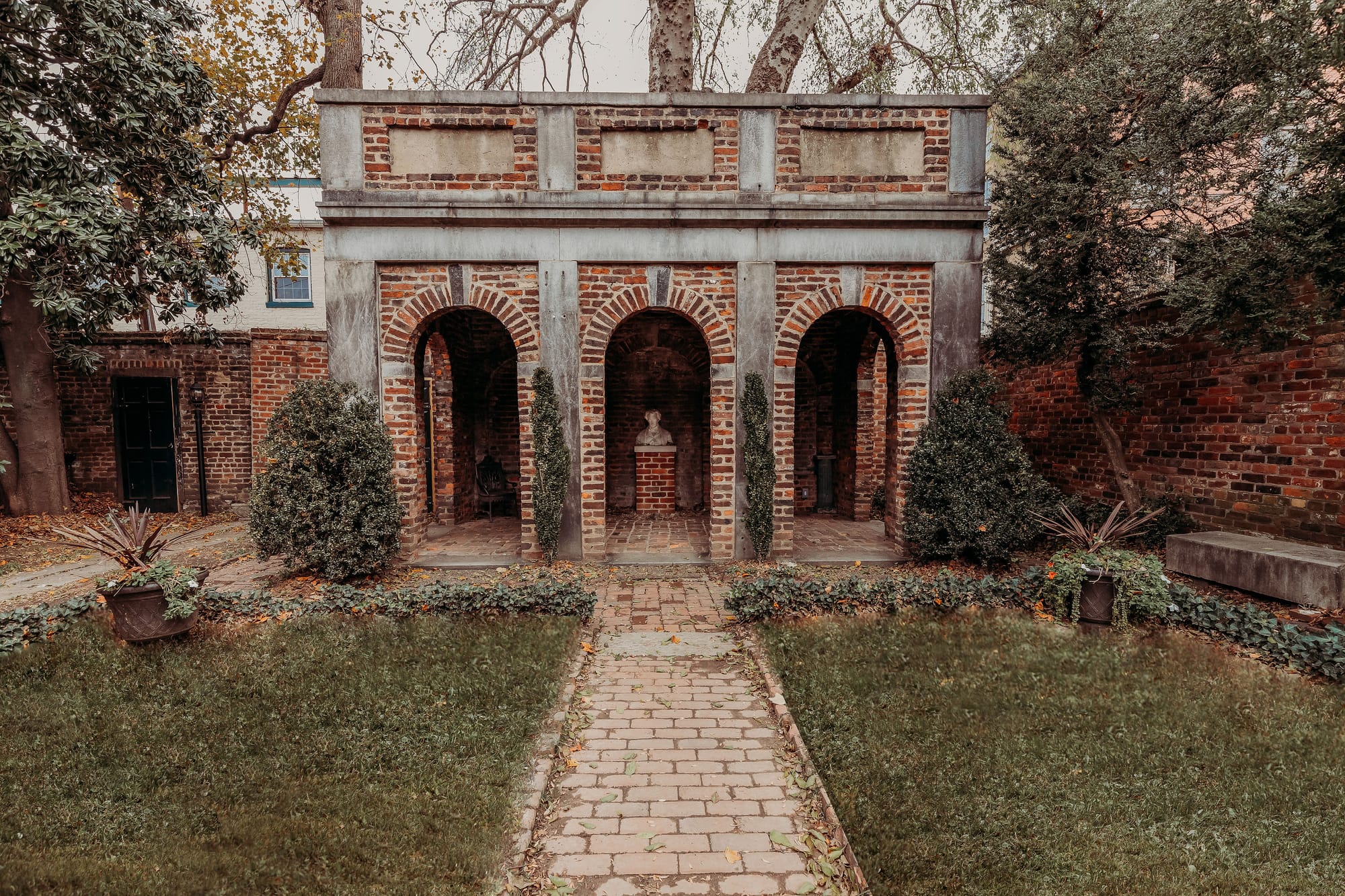
The Poe Museum is anchored by the Old Stone House, Richmond’s oldest residential building and the site where teenage Poe stood guard during Lafayette’s 1824 visit. Today, the house features exhibits focused on Poe’s childhood and early years in the city. Another structure on the grounds, the Poe Shrine, was built using salvaged materials from the Southern Literary Messenger building. When city officials planned to demolish the site in 1916, preservationists rescued its bricks and granite, repurposing them to create the shrine and pave walkways throughout the property.
The Enchanted Garden draws inspiration from Poe’s poem “To One in Paradise,” with its vision of “a green isle in the sea” surrounded by flowers. The space is rich with symbolic details: stone benches from the boarding house where Poe married Virginia, ivy from his mother’s grave at St. John’s Church, and glass shards embedded in the walls, a subtle reference to a security detail in “William Wilson.” Today, the garden hosts weddings and special events throughout the year.
Self-guided audio tours lead visitors through exhibits tracing Poe’s life and literary legacy. Children can participate in scavenger hunts, while scholars may access the research library’s rare manuscripts, letters, first editions, and photographs. The museum also licenses images from its collection of paintings, engravings, and drawings for research and publication.
Plan Your Visit
The Poe Museum is located at 1914 East Main Street in Richmond, Virginia. Hours are Tuesday through Saturday from 10:00 a.m. to 5:00 p.m., and Sunday from 11:00 a.m. to 5:00 p.m. The museum is closed on Mondays. Admission is $12 for adults, $10 for seniors and military members, $6 for youth ages 7–17, and free for children under six and visitors with EBT/SNAP cards. Visit poemuseum.org for current events and additional information.