Sculpting Des Moines: Art Meets Urban Renewal
Wander Through World-Class Contemporary Art at Des Moines, Iowa's Free Downtown Sculpture Park
Downtown Des Moines wasn't always a destination for art lovers. Twenty years ago, the blocks between 10th and 15th Streets held failing auto shops, run-down businesses, and buildings awaiting demolition. City planners chose transformation over decline, clearing the worst structures to create Western Gateway Park. Meanwhile, local venture capitalist John Pappajohn and his wife Mary had been collecting contemporary sculpture for years, displaying pieces in their own yard where curious drivers slowed to look. In 2009, they donated their entire collection to the city: more than two dozen sculptures worth about $40 million. The gift created what is now recognized as one of the country's most impressive outdoor art collections, free and open to anyone who wants to wander through.
The sculpture park covers just over four acres in downtown Des Moines. Opening in September 2009 during the Great Recession, and a year after devastating floods and tornadoes hit Iowa, the park represented a bold choice to invest in public space during hard times. Since the park opened, developers have poured more than half a billion dollars into the surrounding blocks. Major companies built headquarters nearby, and restaurants and shops followed. What had been Des Moines' most troubled neighborhood became one of its most desirable addresses.
Walking Through Art History
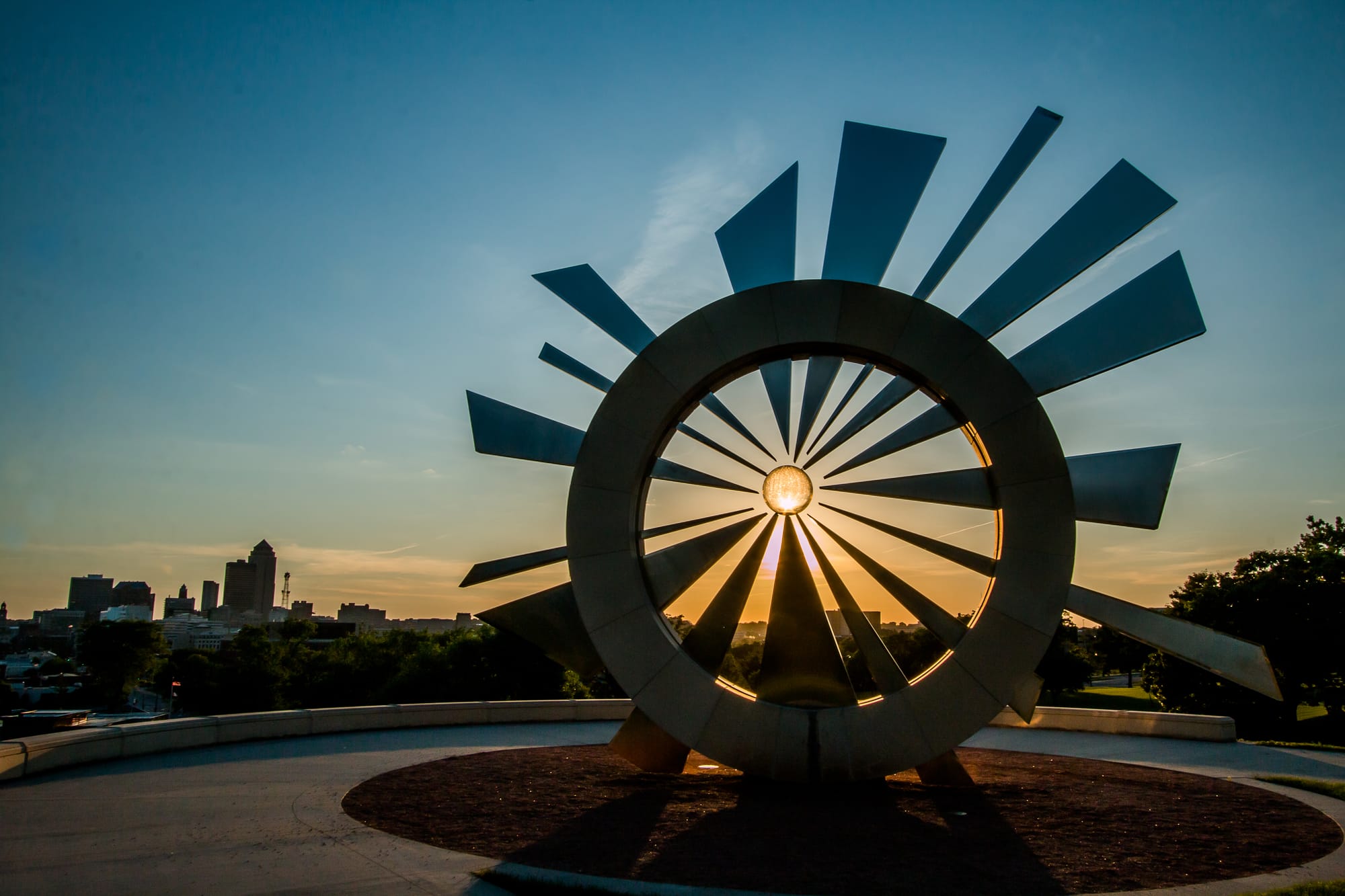
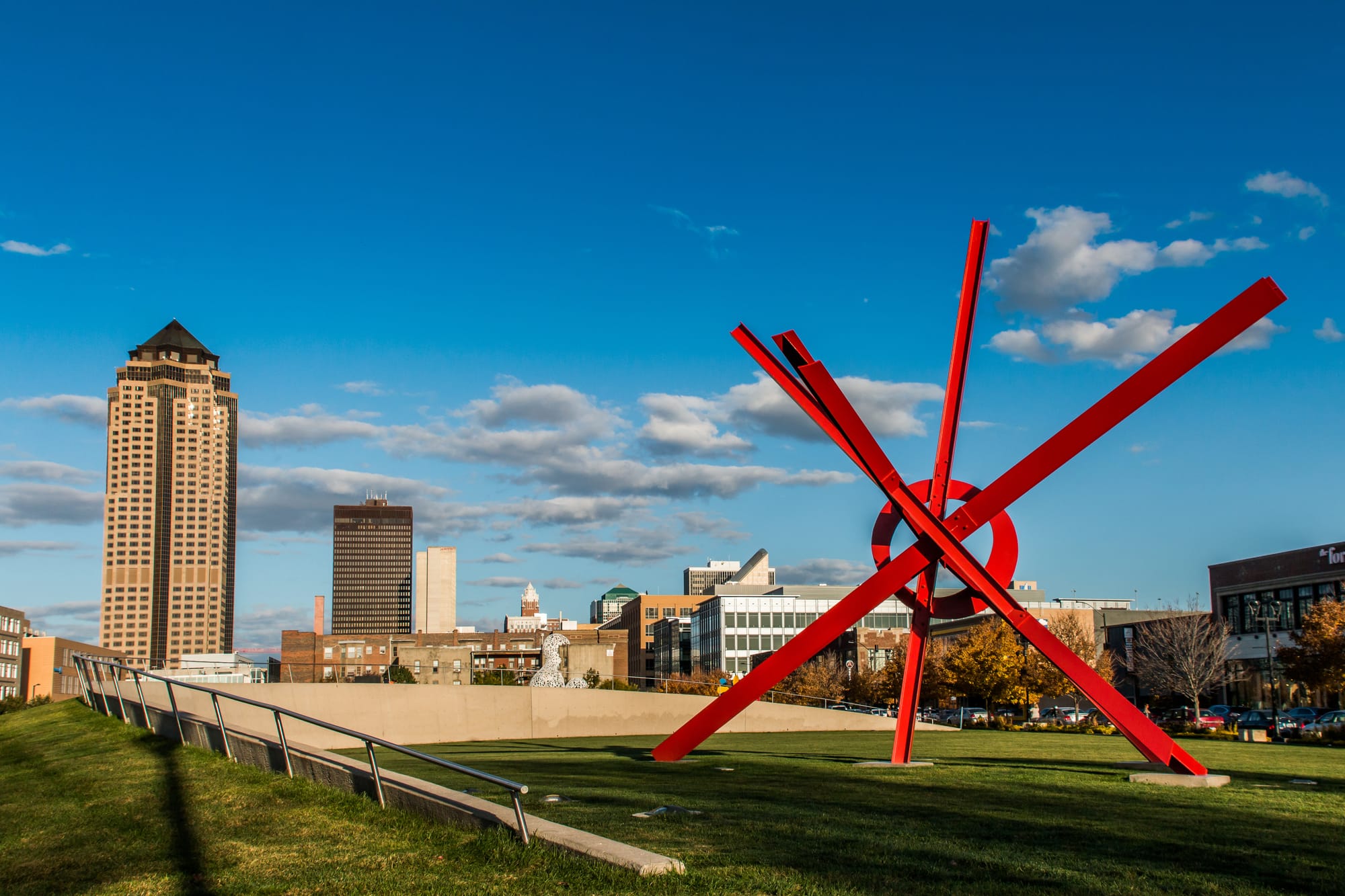
The park's designers organized the sculptures to tell a story about modern art's evolution. Visitors entering from the east encounter realistic bronze figures of people and animals. Moving west, the works become more abstract. Recognizable forms give way to geometric shapes, then to pieces that exist purely as ideas about space and materials.
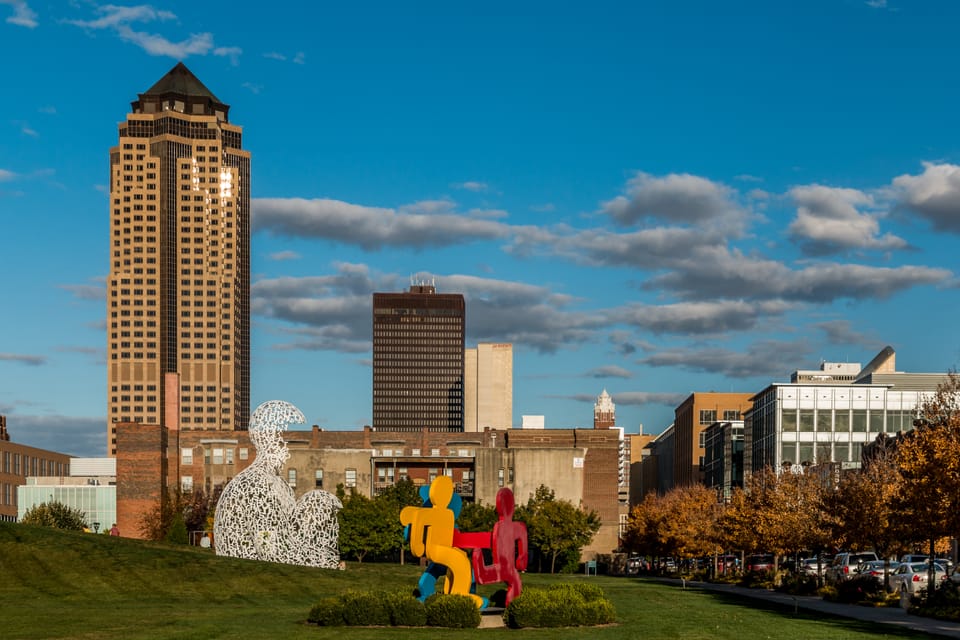
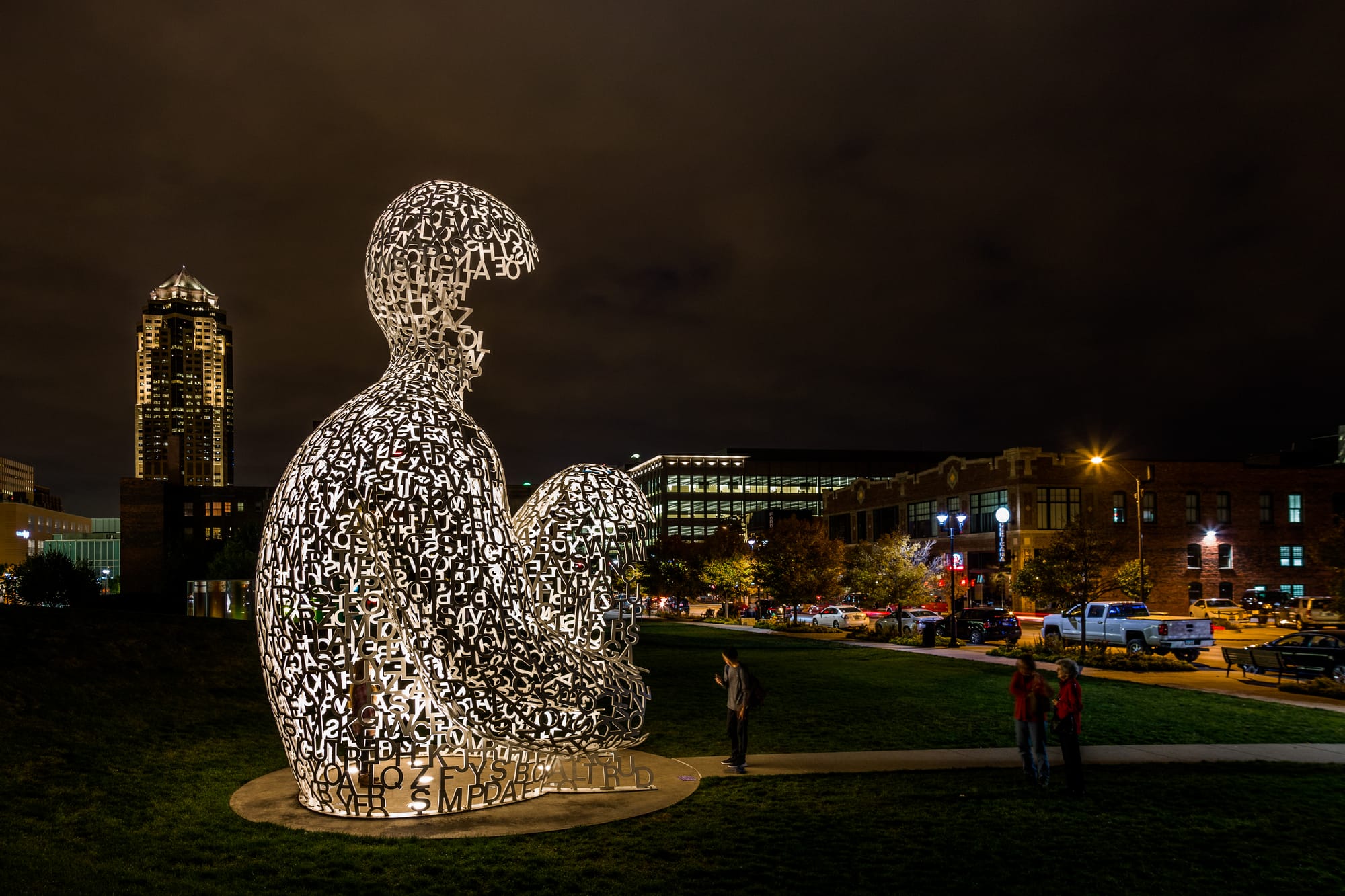
Spanish sculptor Jaume Plensa created the park's most photographed piece. His "Nomade" rises 27 feet tall, depicting a crouching human figure built entirely from white-painted steel letters. The sculpture is hollow - visitors can walk inside and peer out through gaps between the letters. Plensa designed it to explore how we communicate across cultures and languages. The letters don't spell words, but they create meaning through their arrangement into human form.
Keith Haring's trademark dancing figures appear in bright primary colors against the Des Moines skyline. The artist's work brings playful energy to the park's southwest corner. Swiss sculptor Ugo Rondinone contributed several pieces, including a series of weathered forms cast from ancient olive trees. These aluminum sculptures stand 17 feet tall and weigh about a ton each. Their rough, organic surfaces contrast with the polished steel and geometric shapes of other works nearby.
Robert Indiana's famous "LOVE" sculpture arrived in 2019, adding recognizable pop art to the collection. Japanese artist Yoshitomo Nara created "White Ghost," a gleaming figure that blends childlike and canine features. The sculpture came from exhibitions in New York, where it had been displayed at the Asia Society and Park Avenue Armory before finding its permanent home in Iowa.
The Des Moines Art Center, which manages the park, has continued adding pieces since the original donation. Works by Louise Bourgeois, Willem de Kooning, Richard Serra, and Ai Weiwei fill the landscape. Each sculpture sits on carefully designed grounds with curved earthen mounds and shaped cutouts that create natural exhibition spaces. New York architects Diana Agrest and Mario Gandelsonas planned these features to group related artworks and provide sight lines that reveal new perspectives as visitors move through the space.
Music Meets Sculpture
The Des Moines Symphony commissioned composer Steve Heitzeg to create music inspired by the sculptures. His "Symphony in Sculpture" premiered in 2012 during the orchestra's 75th anniversary season. The 25-minute piece contains nine movements, each representing a different sculpture. Heitzeg followed with two more installments, adding movements for more artworks and using unusual instruments such as wind chimes made from olive branches, his late mother's steel mixing bowl, and fossils of trilobites and whale bones.
Visitors can access a free audio tour online through the Des Moines Art Center website. The recordings include commentary from artists and museum staff explaining the sculptures' creation and meaning, plus selections from Heitzeg's symphonies. The Art Center also offers guided tours, which must be arranged at least three weeks in advance through their website.
For families and groups, the Art Center created an exploration guide with activities designed around 11 sculptures. The exercises encourage interaction with the art through movement, observation, and creative prompts, requiring no special materials beyond a camera.
Visiting the Park
The sculpture park opens at sunrise and closes at midnight every day of the year. There is no admission charge and no fence separating the park from surrounding sidewalks. The Des Moines Art Center administers the space but keeps access open. People use the park for lunch breaks, evening walks, picnics, and photography at all hours.
Parking along Grand Avenue and nearby streets uses meters during business hours. On Sundays, street parking is free, making weekend visits convenient for budget-conscious travelers. The park sits in downtown Des Moines at 1330 Grand Avenue, accessible from most hotels and other attractions in the city center. Bike lanes on Grand Avenue provide safe cycling access, and Des Moines Area Regional Transit buses serve the downtown area.
The park welcomes picnickers but asks visitors to keep food and drinks away from the sculptures and use the trash receptacles around the perimeter. Glass bottles are not allowed, following standard city park rules. Alcohol requires a special permit. Smoking is prohibited inside the park but permitted on the public sidewalks surrounding it.
Most sculptures in the park cannot be touched. Climbing or sitting on them damages the finish and poses safety risks. The single exception is Scott Burton's "Seating for Eight," designed for people to sit on.
Photographers find that lighting throughout the day creates different moods. Early morning brings soft light and empty paths. Midday sun creates sharp shadows that emphasize the sculptures' forms. Golden hour before sunset casts warm tones across the white and metallic surfaces. Evening visits after dark let visitors see the sculptures against illuminated downtown buildings. The park never gets so crowded that finding space for photographs is difficult, even on busy summer weekends.
Winter transforms the park. Snow covers the landscape, turning colorful sculptures into stark contrasts against white backgrounds. The cold keeps visits shorter, but some travelers seek out the park in winter for its changed character. Spring and fall offer the most comfortable temperatures for extended wandering. Summer brings the most activity, with downtown workers eating lunch on the grass and families visiting in the evening.
The Des Moines Art Center operates separately from the sculpture park but connects to the same collection through its exhibitions and programming. The museum offers indoor galleries and rotating shows that complement the outdoor permanent collection. For more information about visiting Des Moines, visit www.catchdesmoines.com.