Cultivating Zen at the Portland Japanese Garden
Imagine stepping into a world where city chaos melts away, replaced by the gentle sound of water over stones and the rustle of ancient maples. Portland Japanese Garden offers this escape just minutes from downtown, where visitors discover eight distinct gardens designed to inspire inner peace and cultural understanding. With over 400,000 annual guests finding their zen in this 12.5-acre sanctuary, it's clear the founders' ambitious post-war vision has evolved into something extraordinary.
In the late 1950s, as America grappled with post-war tensions, Portland Mayor Terry Schrunk and community leaders envisioned building a Japanese garden to foster cultural healing and understanding between former enemies. The Japanese Garden Society of Oregon was founded in 1963 to make this dream a reality. The Garden opened to the public in 1967 with a mission to provide Portland citizens with beauty and serenity while building bridges to Japanese culture.
The Garden's design philosophy broke traditional molds from the start. Instead of creating a single-style garden typical of Japan, Professor Takuma Tono of Tokyo Agricultural University crafted a 5.5-acre layout featuring five distinct garden styles. This innovative approach showcased the historical evolution of Japanese landscape design while serving the Society's educational purpose. When the Garden opened that first summer, more than 28,000 people visited before winter closure.
Portland's temperate climate and supportive community helped the Garden flourish as a local landmark, attracting 100,000 annual visitors by the 1980s. In 1988, Japanese Ambassador Nobuo Matsunaga visited for the Garden's 25th anniversary and declared it the most authentic Japanese garden outside Japan. This international recognition established the Garden's reputation as a world-class destination.

Transformation and Growth
By 2005, success brought new challenges. The organization faced a $70,000 deficit on a $1.7 million budget and lacked the unified vision needed to sustain its growing impact. The arrival of CEO Steve Bloom marked a turning point toward transforming the Garden into a cross-cultural resource. Bloom's strategic hires included acclaimed author Diane Durston in 2007 to develop programming around Japanese culture and art, followed by the Garden's first Curator, fourth-generation Japanese gardener Sadafumi Uchiyama, who set new standards for authentic design and maintenance.
This leadership transformation yielded remarkable results. By 2010, annual attendance had doubled to 200,000 visitors, creating a new challenge: popularity was outgrowing capacity. The solution came through partnering with architect Kengo Kuma, whose philosophy of harmonizing architecture with nature aligned with the Garden's mission.
Kuma's Cultural Village, unveiled as part of the $37.5 million Cultural Crossing expansion in April 2017, represents the Garden's bold vision for the future. Inspired by traditional monzenmachi or gate-front towns outside Japanese temples, the Cultural Village features four LEED-certified structures in harmony with the natural landscape. The centerpiece Atsuhiko and Ina Goodwin Tateuchi Foundation Courtyard hosts seasonal activities, performances, and demonstrations, while the Gift Shop offers hand-selected items from Japan, many available nowhere else in the United States.
The expansion also introduced the striking Umami Café, designed to evoke Kyoto's Kiyomizu-dera temple as it appears to float over the hillside. Visitors can enjoy counter service featuring tea from the Jugetsudo Tea Company alongside rotating selections of handcrafted sweets from Portland culinary partners, with to-go options for those who prefer to stroll while sipping.
Gardens as Living Art
The Garden's commitment to authentic Japanese aesthetics extends beyond architecture into a robust arts program. Under the guidance of Curator Emerita Diane Durston and current Arlene Schnitzer Curator of Culture, Art, and Education Aki Nakanishi, the Garden presents four seasonal exhibitions each year that explore the intersection of art and nature. This program has introduced visitors to works by over 75 artists representing Japan's artistic traditions, including internationally recognized masters designated as Living National Treasures alongside emerging young artisans.
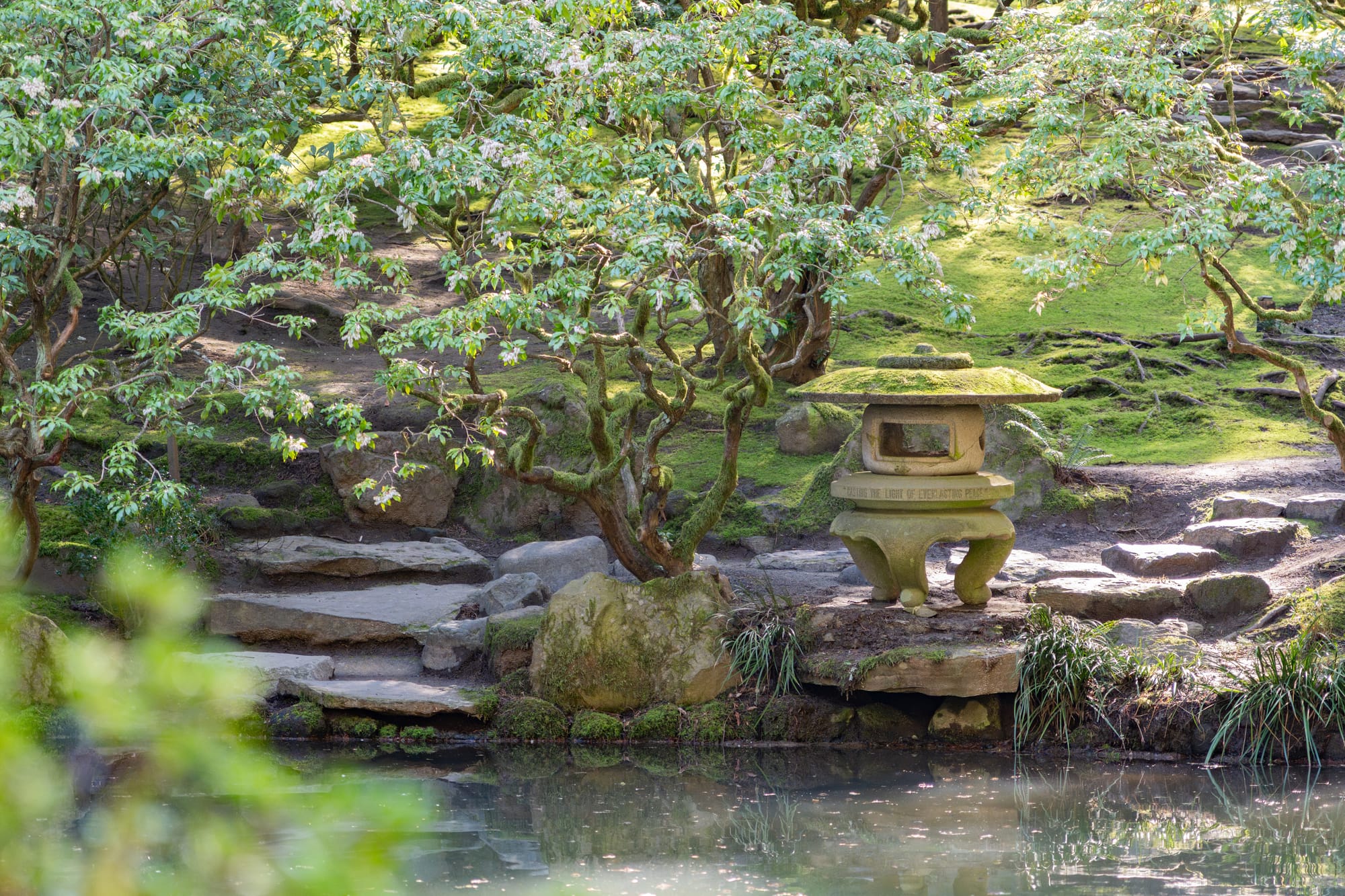
This philosophy of balancing contemplation with harmony among architecture, art, and nature permeates the Garden's eight distinct spaces, each demonstrating different approaches from Japanese landscape design history. The Sand and Stone Garden offers a meditation on negative space through raked sand, large stones, and bordering walls that create peaceful reflection areas. The Natural Garden showcases Pacific Northwest native vine maples positioned to highlight seasonal transformations. The Tea Garden's mossy pathways lead visitors past the rural-style Kashintei Tea House, originally constructed in Japan, helping guests shed concerns about the outside world.
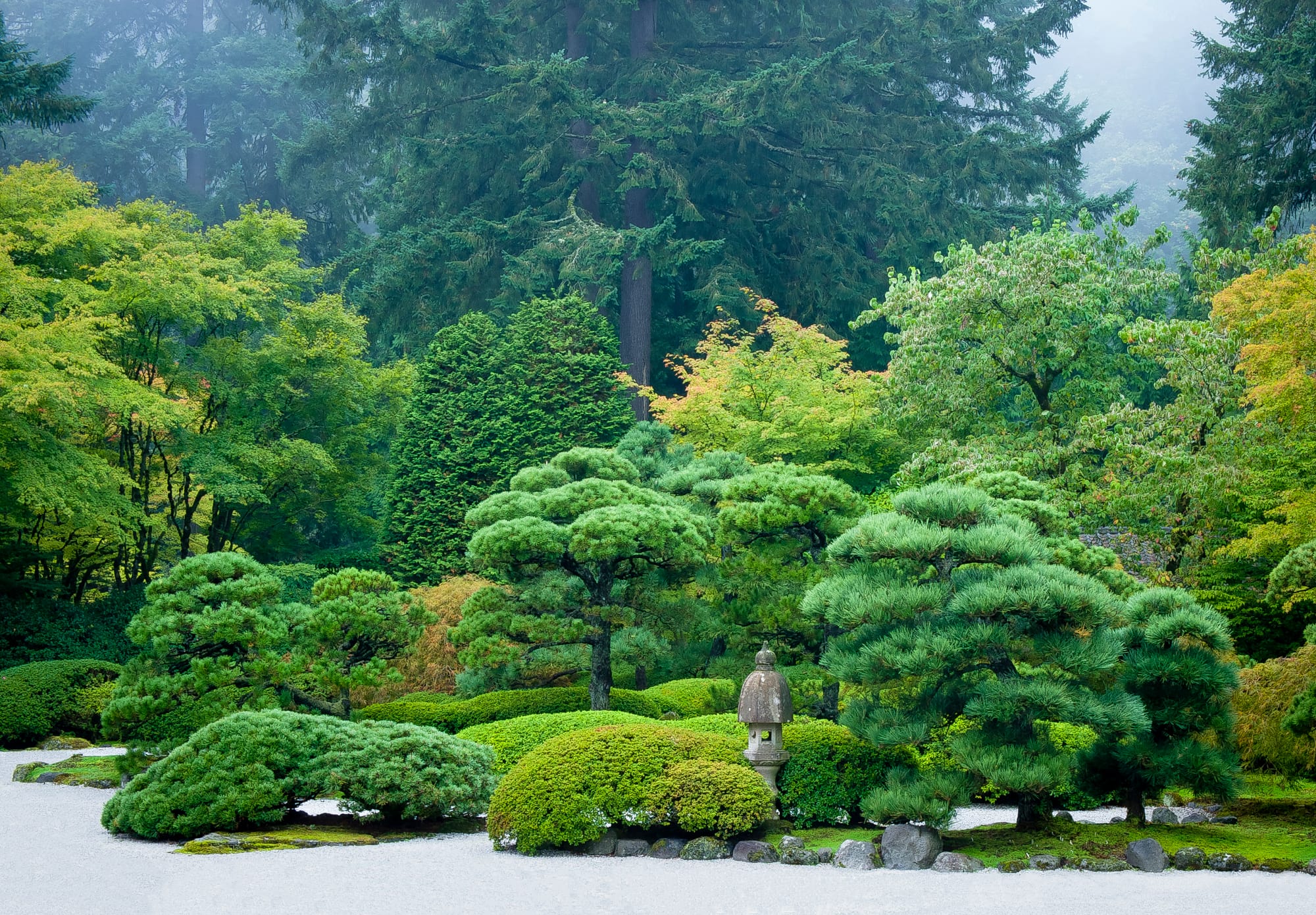
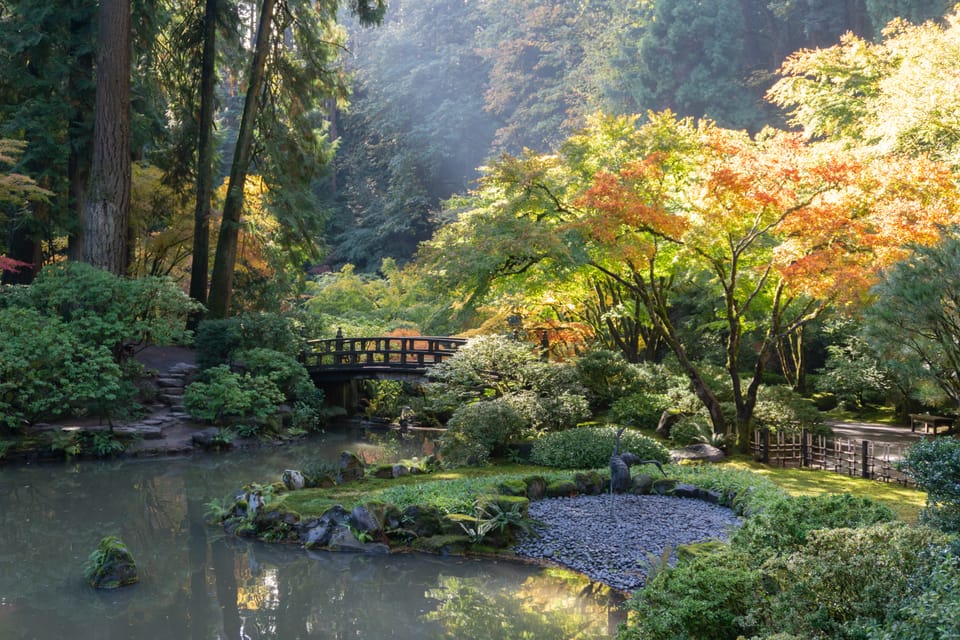
The Strolling Pond Garden captivates with its iconic Moon Bridge and Lower Pond, where enormous koi swim beneath a distinctive eight-plank zigzag bridge while Japanese iris frame the cascading Heavenly Falls. The Flat Garden creates what resembles a living landscape painting, best appreciated from the Pavilion Gallery deck, where azalea shrubs and lace-leaf maples form a serene four-season tableau.

A Living Mission
Today's Portland Japanese Garden operates as a $12 million annual enterprise supported by 27,000 members and 250 dedicated volunteers, many with decades of Garden experience. The organization presents 250 events yearly while maintaining its core commitment to cross-cultural understanding and peace. Adult admission of $22.50 provides access to the historic gardens, demonstrations, and performances included with daily admission, complemented by paid workshops and lectures featuring local artists and Japanese culture experts.
The Garden's influence continues expanding through the Japan Institute, established in 2022 as a global cultural initiative. This sibling organization will operate from a 3.65-acre campus near Forest Park beginning in 2027, allowing for broader program sharing worldwide and deeper international partnerships. Together, Portland Japanese Garden and the Japan Institute share the vision of becoming a leading global voice for cultural understanding in pursuit of a more peaceful, sustainable world.
The pandemic tested this mission when the Garden closed on March 19, 2020, but it emerged as the first cultural organization to reopen on June 11, demonstrating resilience built over six decades. Whether visitors come for volunteer-led tours that reveal rich historical details, quiet personal immersion in nature, or the annual summer marketplace "Behind the Shoji" that takes over the Pavilion Gallery, they discover this urban oasis continues fulfilling its founders' vision of healing and understanding.
Located at 611 SW Kingston Avenue in Portland's Washington Park, above the International Rose Test Garden, the Portland Japanese Garden welcomes all visitors through the Calvin and Mayho Tanabe Welcome Center. From there, guests can walk the winding Entry Garden pathway that combines Japanese architecture with Pacific Northwest natives like trillium and bleeding hearts, or take the free ADA-accessible shuttle that carries visitors up and down the hillside on request.
The Garden's success story, from post-war vision to global destination, proves that spaces designed for beauty and contemplation can foster the cultural understanding and peaceful connection its founders dreamed of creating. In a world still grappling with division and conflict, Portland Japanese Garden stands as a living testament to what becomes possible when communities choose healing over hatred and understanding over fear.
For more information about visiting hours, current exhibitions, and special events, visit www.japanesegarden.org.