Soak Up History at Hot Springs National Park
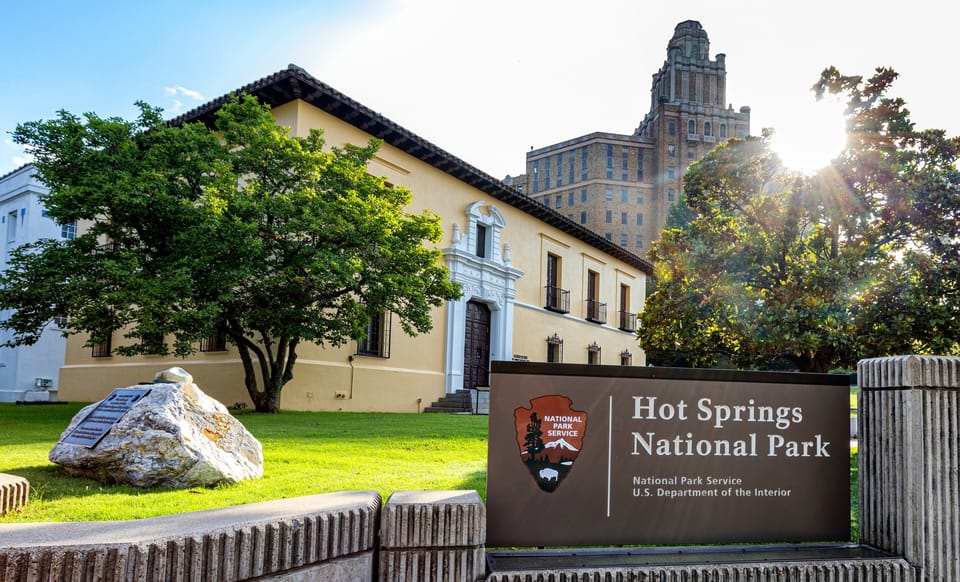
Hot Springs National Park in central Arkansas is one of the most distinctive protected areas in the United States: the only national park that includes a city within its borders. Covering more than 5,500 acres, it combines historic downtown Hot Springs with natural thermal springs and miles of forested mountain trails.
The park's 47 hot springs have drawn visitors for centuries, first serving as healing grounds for the Quapaw and Caddo peoples long before European settlement. After the area became part of the United States in the 1803 Louisiana Purchase, it quickly became a popular resort destination. The government recognized its significance early and preserved the land in 1820, decades before Yellowstone became a national park. Hot Springs did not receive official national park status until 1916, but its early protection makes it one of the oldest preserved areas in the country.
The springs are notable for their nonvolcanic origin, a geological rarity among global thermal features. Each day, more than 700,000 gallons of mineral-rich water emerge at consistent temperatures, attracting visitors seeking therapeutic benefits. Unlike other hot spring destinations, there are no natural outdoor bathing pools. Instead, the thermal waters flow through a system of pipes to fountains and the historic bathhouses where visitors can access them.
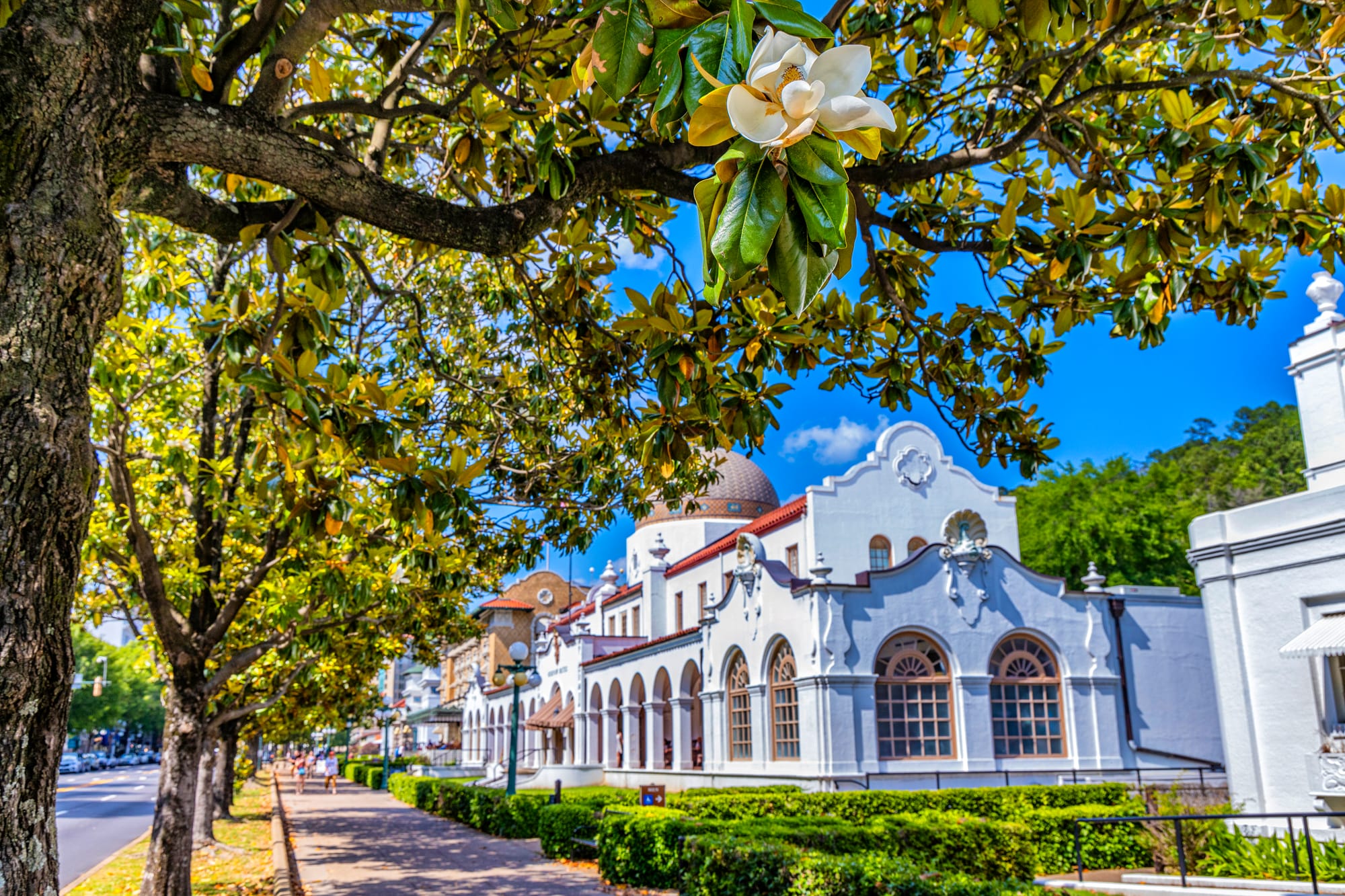
Bathhouse Row
The highlight of Hot Springs National Park is Bathhouse Row, where eight bathhouse buildings constructed between 1892 and 1923 create an impressive streetscape. This architectural treasure, along with the Grand Promenade, was designated a National Historic Landmark District in 1987, preserving one of the finest collections of spa architecture in America.
The Fordyce Bathhouse now serves as the park's visitor center, displaying historic artifacts and stained glass ceilings that illustrate the area's history. Daily ranger-led tours provide information about the period when affluent visitors traveled from across the country to use the thermal baths.
For those seeking an authentic soaking experience, two bathhouses continue their original mission. The Buckstaff Bathhouse, which has operated continuously since opening on February 1, 1912, offers a guided thermal bath experience using mineral-rich water from the park's 47 hot springs. This remarkably preserved Edwardian-style building features imposing Doric columns, Colorado marble interiors, and original hexagonal tile floors. With capacity for 1,000 bathers daily, the Buckstaff maintains its historic charm while providing the same therapeutic treatments that drew visitors over a century ago. The facility operates daily from 8:00 am to 3:00 pm, with baths and massages available on a walk-in basis. For more information about services and current rates, visit www.buckstaffbaths.com
The Quapaw Bathhouse offers a more contemporary approach to thermal bathing. Originally opened in 1922 and renovated in 2008, it now operates as a modern family-oriented spa offering private baths, public thermal pools, and spa services. No reservations are required as access is first-come, first-serve, though proper swim attire is required for the public baths. It welcomes visitors daily from 10:00 am to 6:00 pm, except Tuesdays. For more information about amenities and pricing, visit www.quapawbaths.com.
Beyond the Baths
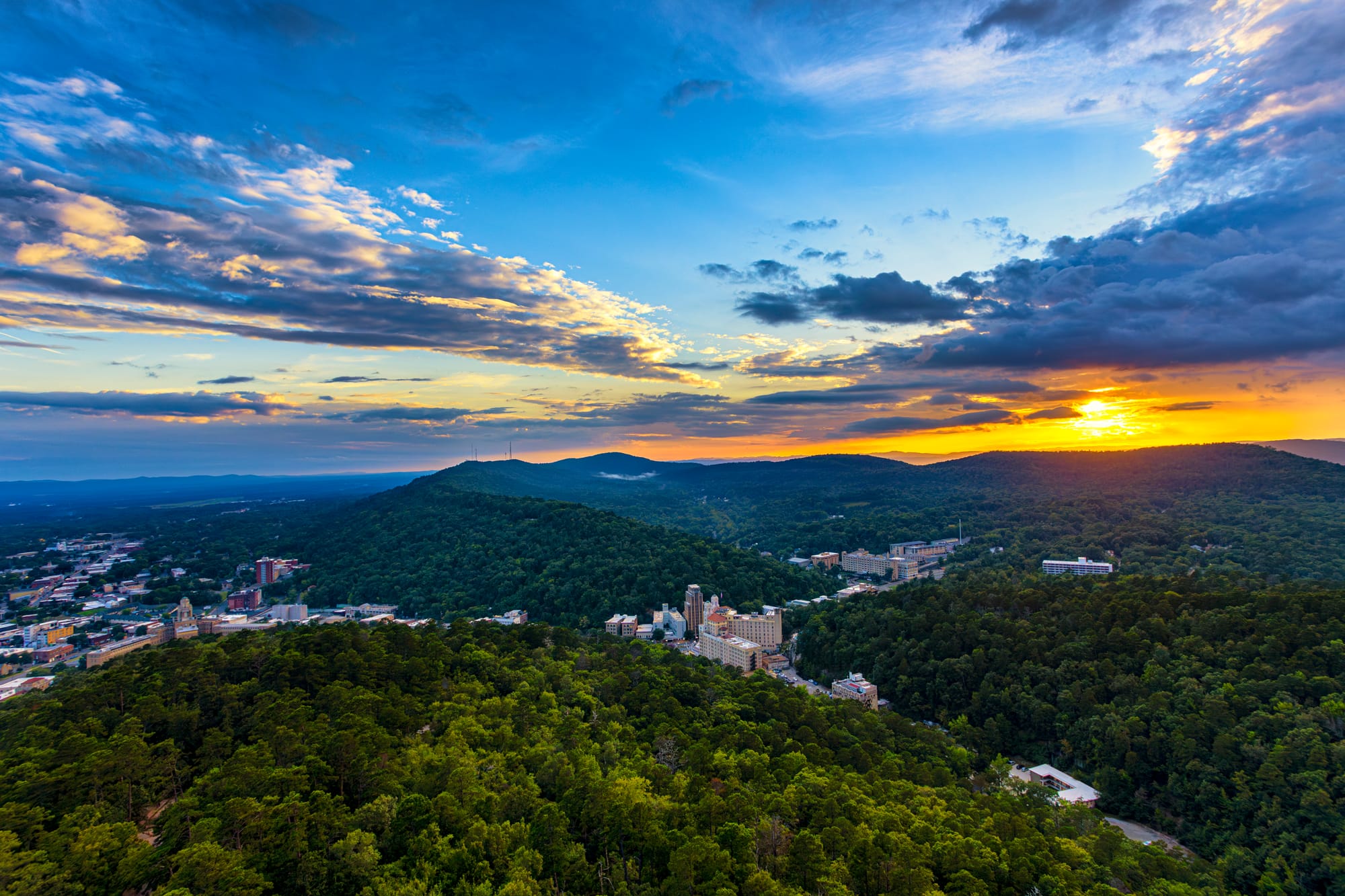
In addition to the thermal springs and historic bathhouses, Hot Springs National Park features 26 miles of hiking trails through the Ouachita Mountains, with routes ranging from 0.2 to 17 miles. Autumn is especially favorable for outdoor activities because of moderate temperatures and colorful foliage.
Those seeking panoramic views can ascend the Hot Springs Mountain Tower, a 216-foot structure that has stood on the mountainside in various forms since 1877. The current tower, built in 1983, provides elevator access to observation decks with 140-square-mile vistas of the park and surrounding Ouachita Mountains. The $14 admission fee grants access to one of Arkansas's most impressive overlooks.
Visitors can access the mineral-rich thermal water at seven designated locations throughout the park, with the most accessible fountains near the former Hale and Maurice bathhouse buildings. Many people bring containers to collect the water and take it home.
Hot Springs hosts several annual events, including the World Championship Running of the Tubs in June, a race using modified bathtubs that honors Bathhouse Row. In March, the World's Shortest St. Patrick's Day Parade takes place, and in October, the Hot Springs Documentary Film Festival, the oldest such festival in North America, is held.
Planning Your Visit
Hot Springs National Park is 53 miles southwest of Little Rock's Clinton National Airport, about one hour by car. The regional Hot Springs Memorial Field Airport offers additional flight options. Within the town, ride-hailing services and rental cars are available for transportation and exploring the park and surrounding areas.
Admission to Hot Springs National Park is free year-round, although some attractions, such as the Mountain Tower, are closed from November through March.
For more information about visiting Hot Springs National Park, including current operating hours and seasonal closures, visit www.hotsprings.org.