
Wright at Home: Frank Lloyd Wright's Illinois Houses
Tour Historic Frank Lloyd Wright Homes in Oak Park, Springfield, and Rockford, Illinois
Illinois shaped Frank Lloyd Wright, and in return, Wright transformed American architecture from his home state. From 1888 to 1893, Wright worked for the Chicago architectural firm of Adler & Sullivan, learning from Louis Sullivan while developing the Prairie School style that would make him famous. After establishing his own practice, Wright continued creating revolutionary designs throughout Illinois, leaving behind homes that visitors can still experience today.
The Birthplace of Prairie Style: Home and Studio, Oak Park
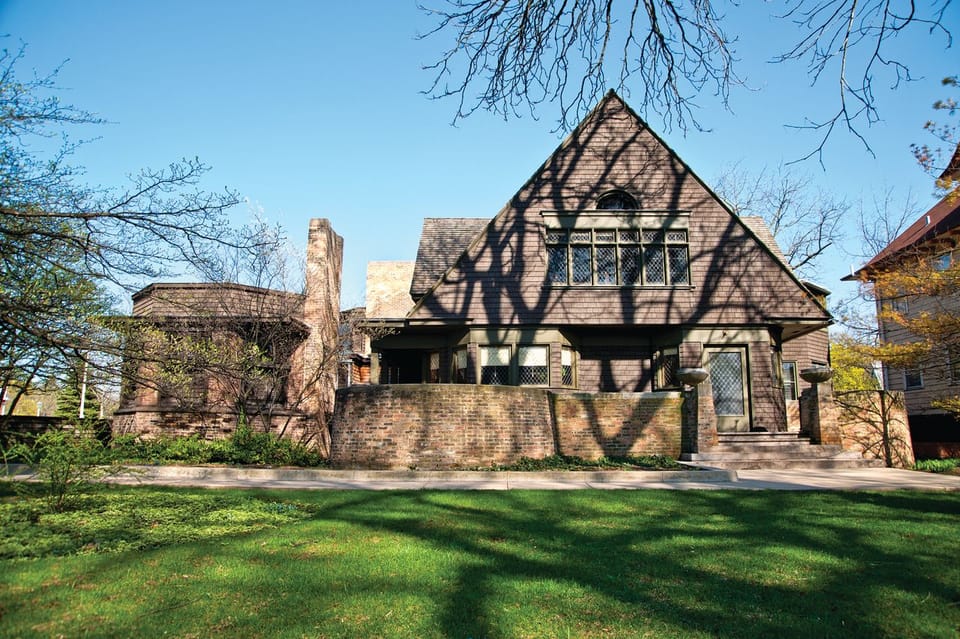
Wright's own residence tells the story of an architect discovering his voice. In 1889, Louis Sullivan loaned Wright money to purchase a lot in Oak Park and build a home for himself and his bride, Catherine Tobin. What began as a family residence became the testing ground for Wright's architectural innovations over the next twenty years.
The Home and Studio represents Wright's experimental laboratory, where he developed the Prairie Style inspired by the Midwest's flat landscape. Emphasizing horizontal rather than vertical lines, these designs featured flat or shallow rooflines, rows of windows, overhanging eaves, and bands of natural materials that connected buildings to their surroundings. Centrally-located fireplaces and integration with the landscape became Wright hallmarks.
As Wright's family grew to six children by 1903, he added a studio to the north side of the main house. From this workspace, Wright designed approximately 125 buildings during his most productive eleven-year period. The structure itself appears almost assembled from geometric shapes, reflecting Wright's lifelong fascination with geometry that would influence all his future work.
Guided tours reveal the intimate spaces where Wright and his family lived, showcasing original Wright-designed furniture, textiles, and architectural details. The Inside and Out Tour combines the guided home and studio experience with a self-guided audio walking tour of the surrounding Historic District, allowing visitors to explore other Wright-designed homes in the neighborhood at their own pace.
The Frank Lloyd Wright Home & Studio is located at 951 Chicago Avenue in Oak Park. For more information and tours visit www.flwright.org.
Grand Prairie Vision: Dana-Thomas House, Springfield
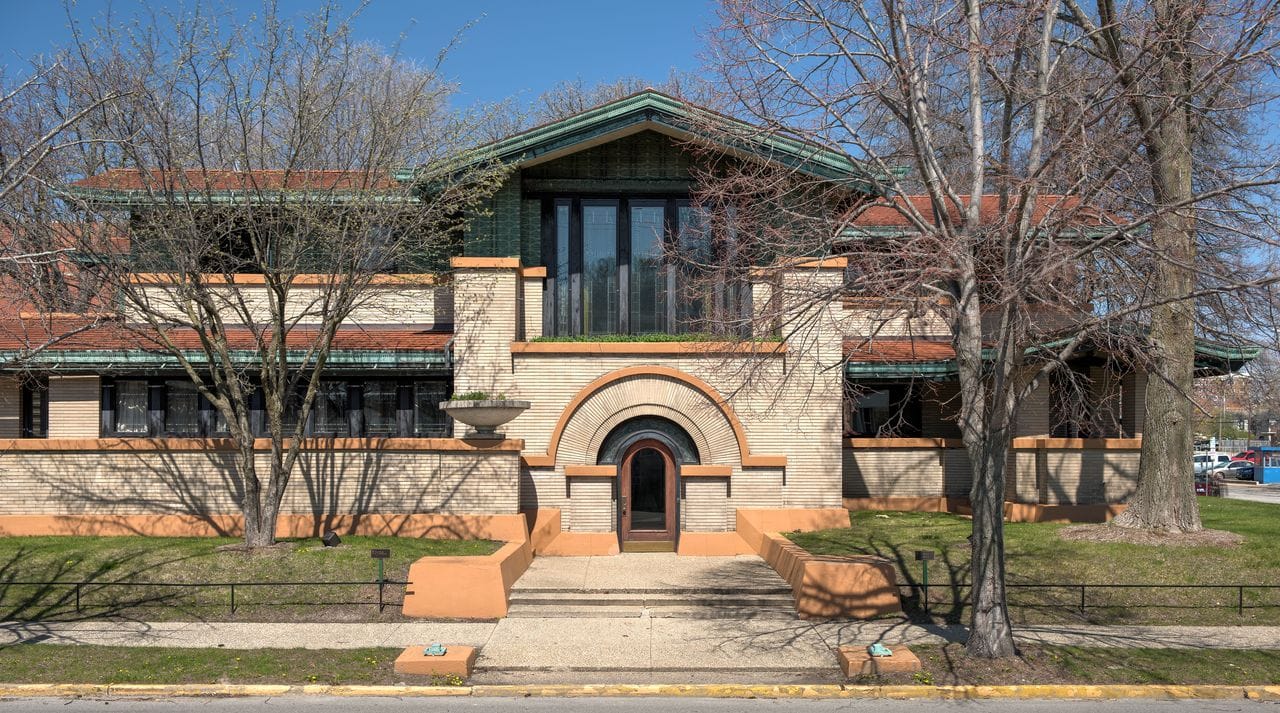
The Dana-Thomas House demonstrates Wright's Prairie Style at its most ambitious scale. In 1902, Susan Lawrence Dana asked Wright to completely restructure her existing thirty-year-old Springfield home, creating something far beyond a typical renovation project.
Completed in 1904, the 12,000-square-foot residence showcases Wright's mastery through more than 100 original furniture pieces and 450 art glass windows, doors and light fixtures. The home features a spacious two-story living room as its centerpiece, surrounded by rooms that flow seamlessly into one another.
Original terra cotta sculpture by Richard W. Bock decorates the vestibule and reception hall, while the dining room displays the only original George Niedecken mural surviving in a Wright house. Wright incorporated sumac and butterfly themes throughout the design, creating visual continuity across the expansive interior.
Susan Lawrence Dana, a Springfield socialite and women's activist, lived in the home until 1944 when Charles C. Thomas purchased it for his publishing firm. The State of Illinois acquired the property in 1981, and it's now maintained by the Historic Preservation division of the Illinois Department of Natural Resources.
The Dana-Thomas House is located at 301 East Lawrence Avenue in Springfield. For more information and tours visit www.dana-thomas.org.
Innovation Through Necessity: Laurent House, Rockford
The Laurent House represents Wright's most innovative residential design, created for a client whose needs demanded architectural solutions decades ahead of their time. Kenneth Laurent, a World War II Navy veteran, was paralyzed from a spinal tumor in 1946. When the 1948 Specially Adapted Housing Program offered veterans grants to build or modify homes for disabilities, Kenneth and his wife Phyllis approached Wright for help.
After seeing Wright's Loren Pope House featured in House Beautiful magazine, Phyllis recognized the open floor plan's potential for wheelchair accessibility. Kenneth contacted Wright about his need for practical and accessible design with a $20,000 budget, though the final cost exceeded this amount.
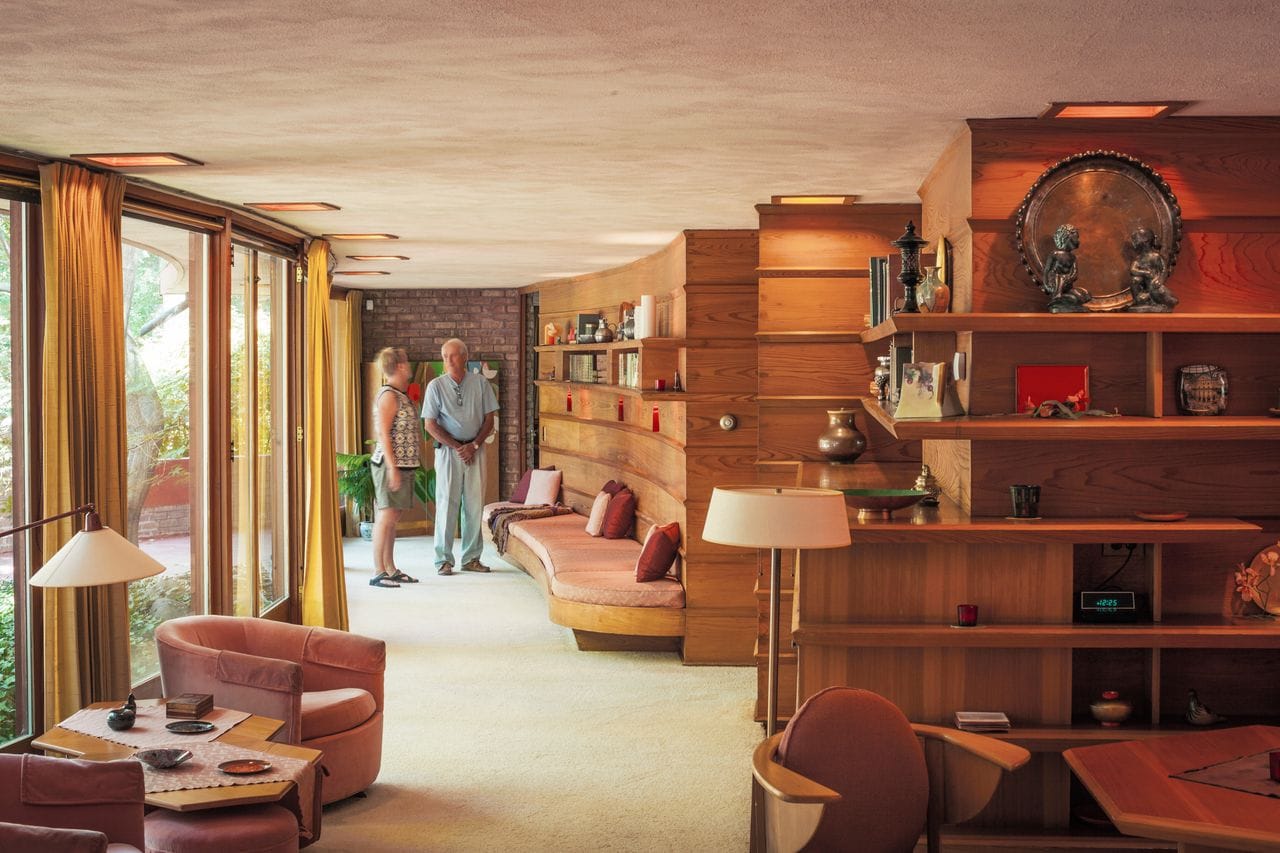
Wright's response was revolutionary. Completed around 1952, the "Little Gem" - as Wright called it - became the only home the famous architect ever designed specifically for a physically challenged individual. Built on a 1.3-acre wooded lot with a creek, the house features a "solar-hemicycle" design with a 55-foot concave wall of windows alternating between fixed and operating panes.
Every element accommodated wheelchair use: specially positioned light switches, door handles, faucets, and drawers. Wright designed wider doorways, larger shower spaces, and innovative hinged doors and storage solutions. The house featured Wright's signature elements including a suspended masonry fireplace, radiant floor heating, and built-in furniture constructed on-site.
Interestingly, all hardware came from National Lock Corporation, where Kenneth worked as a statistician for 41 years. Wright often requested this company's products for his Usonian homes, always asking Kenneth for the "special discount rate."
The Laurents lived in their Wright-designed home for sixty years. Kenneth continued working full-time throughout his life, while he and Phyllis shared seventy years of marriage. When they passed away, the Laurent House Foundation purchased the property in 2012, preserving it as a museum.
The Laurent House is located at 4646 Spring Brook Road in Rockford. For more information and tours visit www.laurenthouse.com.
Experiencing Wright's Illinois Legacy
These three homes illustrate different aspects of Wright's genius - from the experimental energy of his Oak Park years to the refined luxury of the Dana-Thomas House to the compassionate innovation of the Laurent House. Each offers guided tours that reveal how Wright's Illinois roots influenced his revolutionary approach to American architecture.
Visiting these homes provides insight into both Wright's creative process and the lives of the families who called these architectural masterpieces home. From Oak Park to Springfield to Rockford, Wright's Illinois houses demonstrate how great architecture serves both artistic vision and human needs.
For more information about other Illinois attractions, visit www.enjoyillinois.com.