Beauty Blooms at Phoenix's Desert Botanical Garden
In a city known for swimming pools and air conditioning, Phoenix harbors an unexpected treasure that celebrates the very environment most people try to escape. The Desert Botanical Garden transforms what many consider barren wasteland into a living museum of extraordinary beauty, where 50,000 desert plants create a landscape that challenges every assumption about what makes a garden spectacular.
Nestled among the red rocks of Papago Buttes, this 140-acre sanctuary proves that desert doesn't mean desolate. Since opening in 1939, the Garden has grown from a passionate group's "Save the Desert" campaign into one of the world's premier collections of arid-land plants, attracting over 634,000 visitors annually who come to discover that desert landscapes can be every bit as lush and vibrant as any traditional garden.
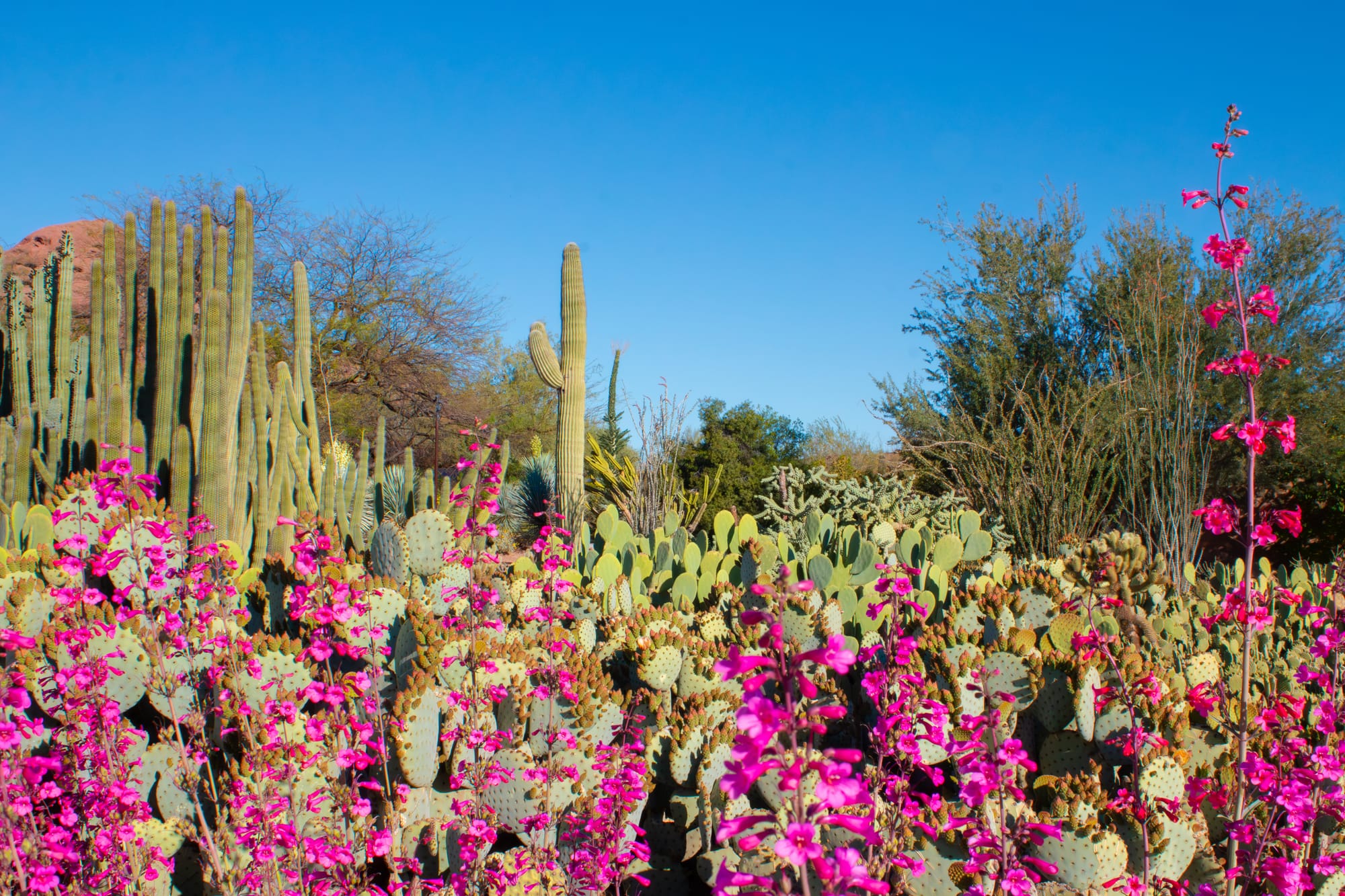
A Living Laboratory in the Heart of the City
What makes this garden extraordinary isn't just its collection—it's the story of adaptation and survival written in every succulent leaf and towering saguaro. Five themed trails wind through different desert ecosystems, each revealing how plants have developed ingenious strategies to thrive where others would wither.
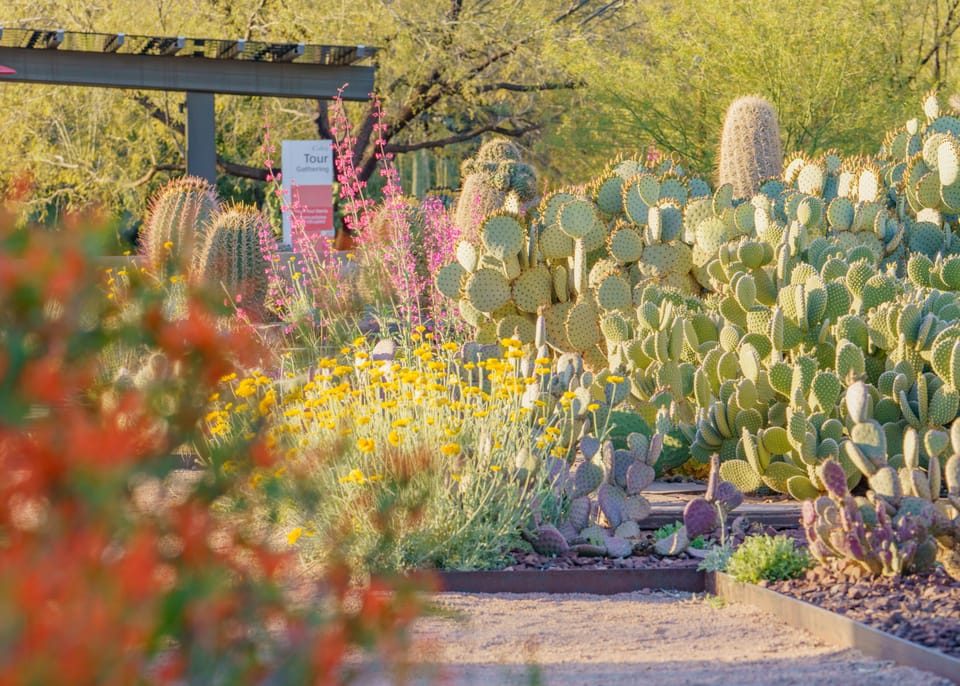
The Desert Discovery Trail showcases the Garden's main collection, featuring plants from deserts around the globe. Here, massive barrel cacti sit alongside delicate desert wildflowers, while towering saguaros—some more than 150 years old—provide dramatic vertical elements that transform the landscape into something almost architectural.
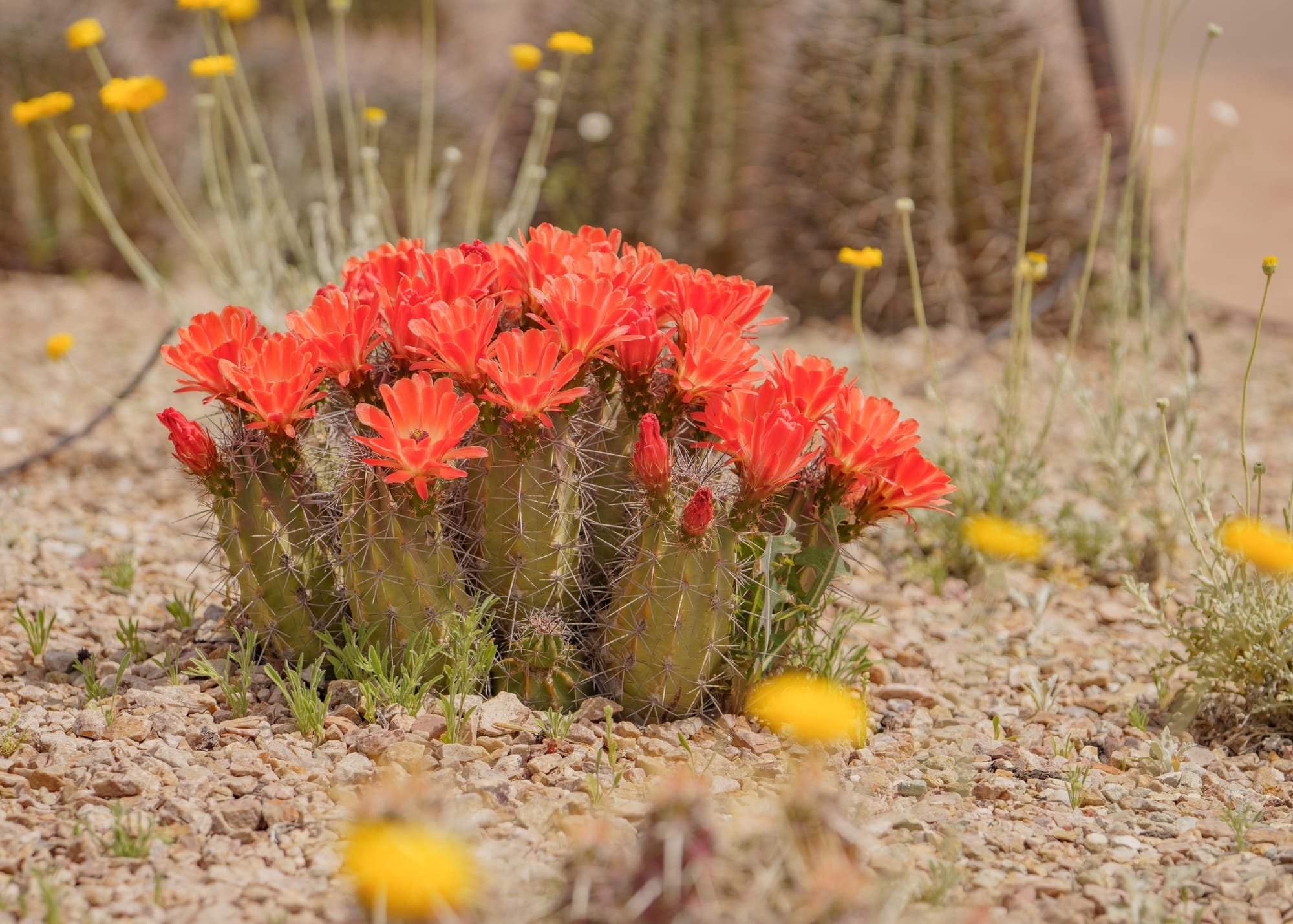
For those seeking color, the Harriet K. Maxwell Desert Wildflower Trail delivers seasonal bursts of brilliant blooms that attract bees, butterflies, and hummingbirds. Different species bloom throughout the year, creating waves of color that paint the landscape in unexpected hues.
The Center for Desert Living Trail offers practical inspiration, demonstrating how desert principles can create beautiful, water-wise home gardens. Fragrant herbs mingle with vegetable beds and shady rest areas, proving that desert gardening can be both sustainable and sensuous.
More Than Just Plants
The Garden serves as a crucial research center, with 26 scientists working across four continents to study and preserve threatened desert plants. Their work extends far beyond Phoenix, with conservation projects spanning from the Sonoran Desert to the Atacama, from Australia to South Africa. The Garden currently protects 548 rare and endangered plant species, making it a modern-day ark for some of the world's most vulnerable flora.
Recent expansions have added state-of-the-art research facilities, including the Hazel Hare Center for Plant Science, which advances the Garden's mission to become a global leader in desert plant conservation. These efforts take on special urgency as climate change threatens desert ecosystems worldwide.
Art Meets Nature
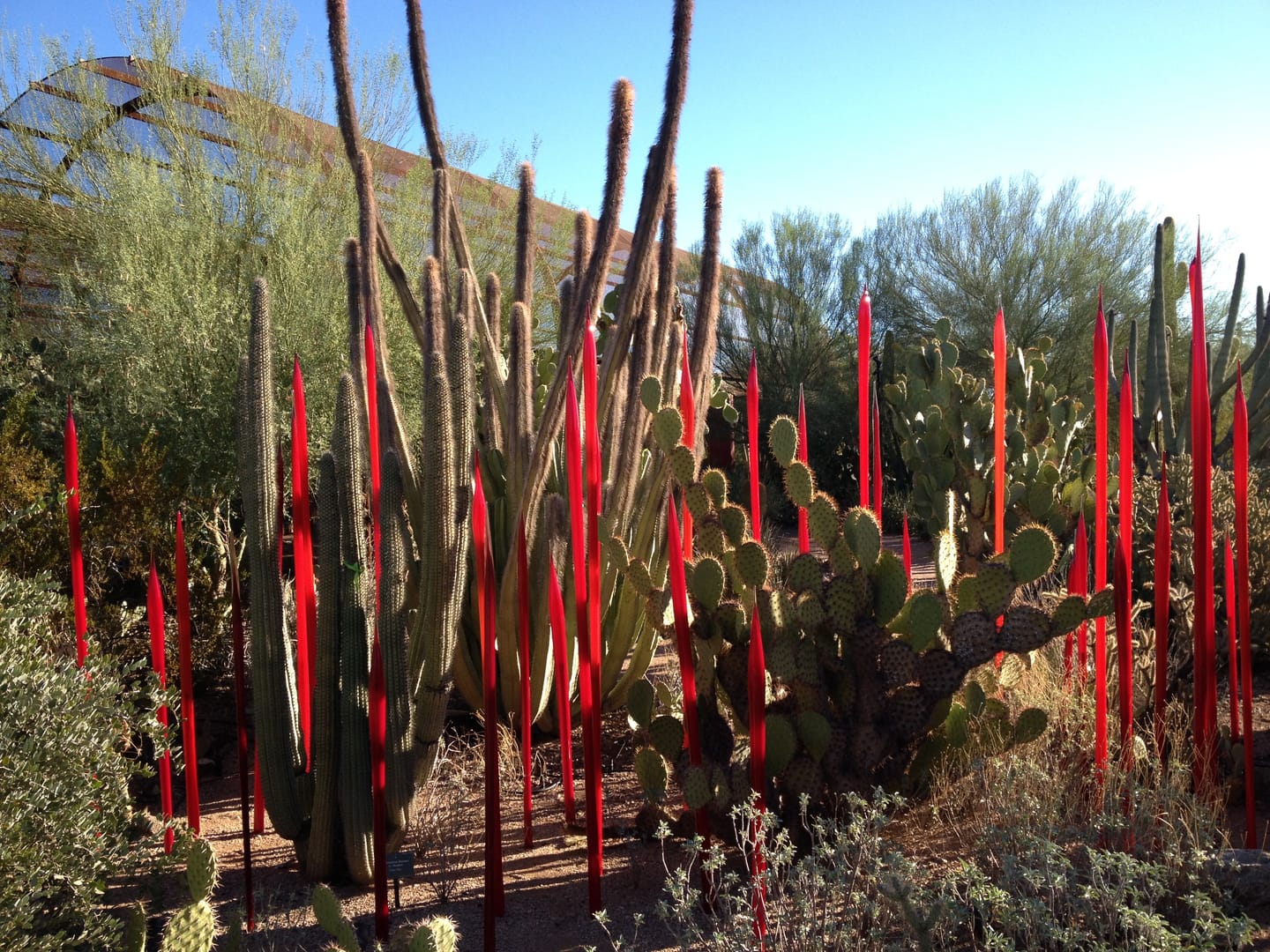
Beyond its scientific importance, the Garden has become a premier venue for world-class art installations. Recent exhibitions have included works by renowned glass artist Dale Chihuly, whose colorful sculptures created stunning contrasts against the desert backdrop, and Fernando Botero's monumental bronze sculptures. The Garden's current "Toward 2050" installation invites visitors to create handmade artworks expressing their environmental hopes, weaving community engagement into the garden experience.
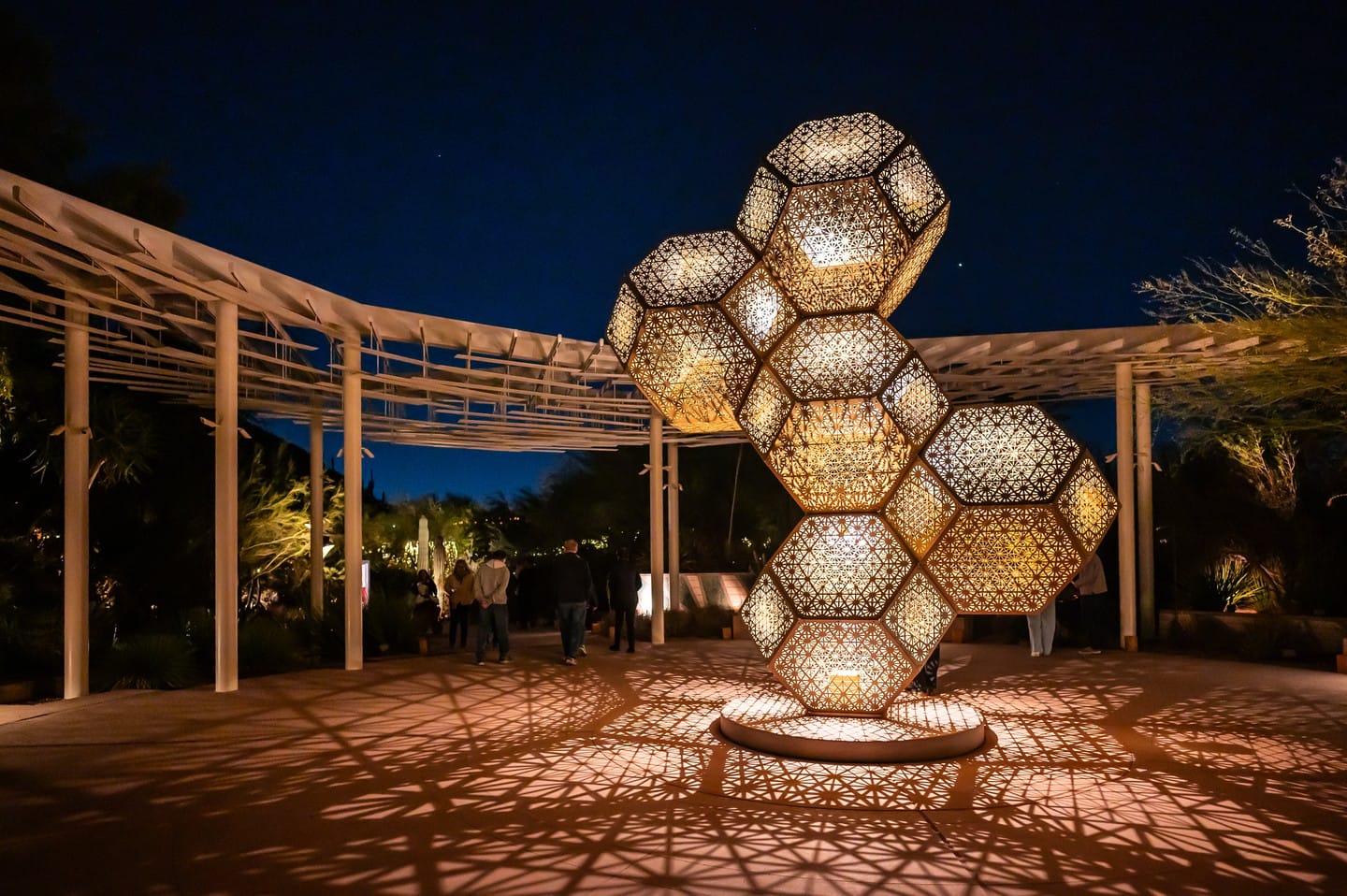
The upcoming "Desert Pulse" exhibition will bring London-based ScanLAB Projects' groundbreaking visual artwork to the Garden, creating what promises to be the first installation of its kind in the Southwest to connect science and nature at such a scale.
Seasonal Magic
While many assume desert gardens offer little seasonal variation, the Desert Botanical Garden transforms throughout the year. Spring brings desert wildflower blooms that can carpet entire hillsides in gold and purple. Summer offers the Garden's popular "Flashlight Nights," when families explore the trails after dark, discovering how the desert comes alive when temperatures drop.
The Garden provides different experiences throughout the seasons, with comfortable visiting conditions year-round. Special events, from the vibrant Juneteenth celebration to intimate evening concerts, add cultural richness to the natural beauty.
Recent additions include expanded educational programs, from Desert Discovery Camps for children to specialized workshops on desert gardening and plant propagation. The Garden's commitment to community education ensures that visitors leave not just impressed, but informed about desert ecosystems and conservation.
The Garden is located at 1201 N. Galvin Parkway in Phoenix, Arizona. For more information about hours, special events, and educational programs, visit www.dbg.org.