Cleveland's Museum of Natural History: 4.6 Billion Years in the Making
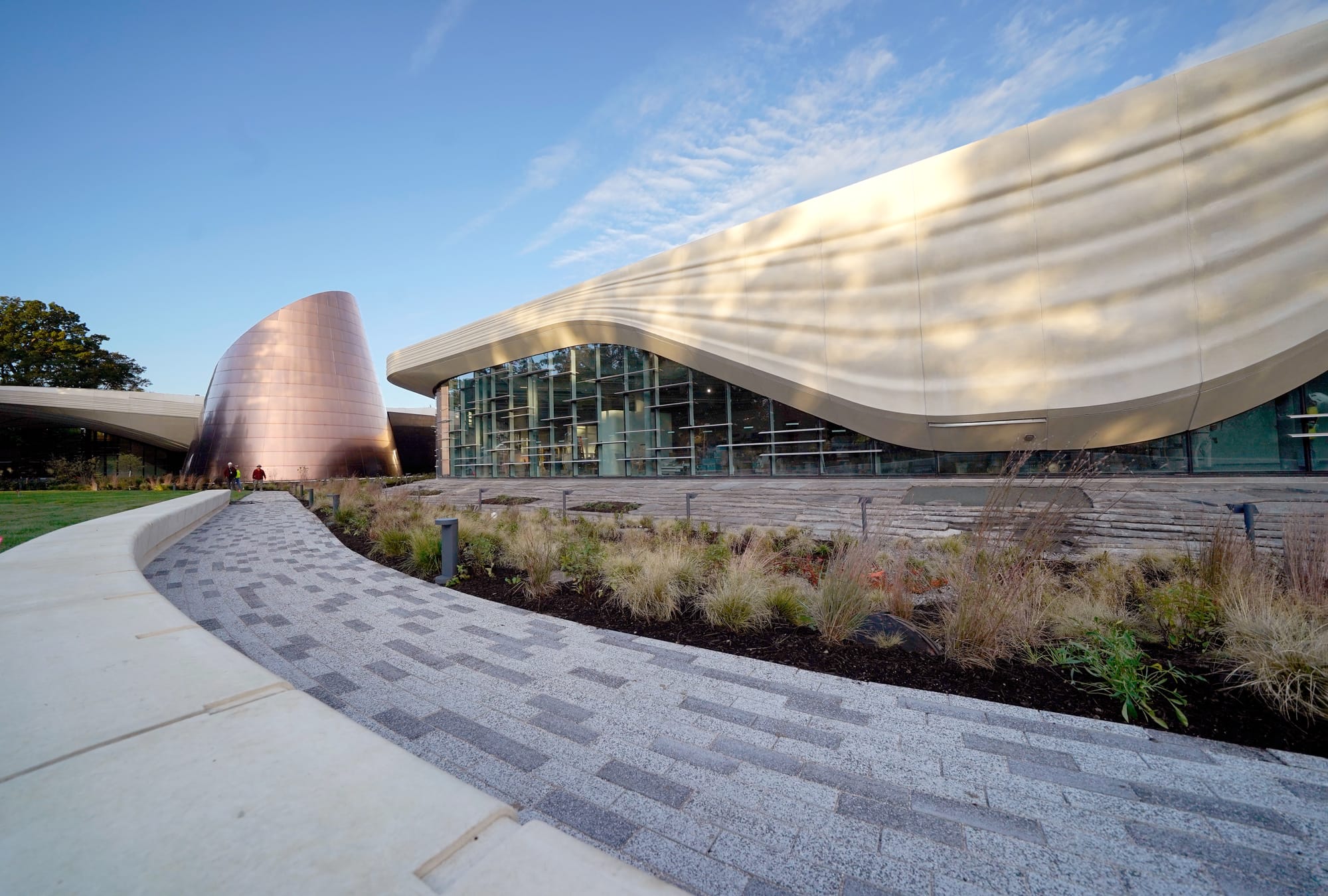
For more than a century, the Cleveland Museum of Natural History has been one of the Midwest's most beloved institutions. In December 2024, it got even better. After years of planning and construction, the Museum reopened with a spectacular expansion: nearly 375,000 square feet of new and updated space and more than two acres of new outdoor areas. Here's what's waiting for you inside.
Meet the Icons
Every great museum has its stars, and Cleveland’s Museum of Natural History has an especially compelling cast. Step into the free Visitor Hall and you’ll come face to face with some of the most extraordinary specimens in the world.
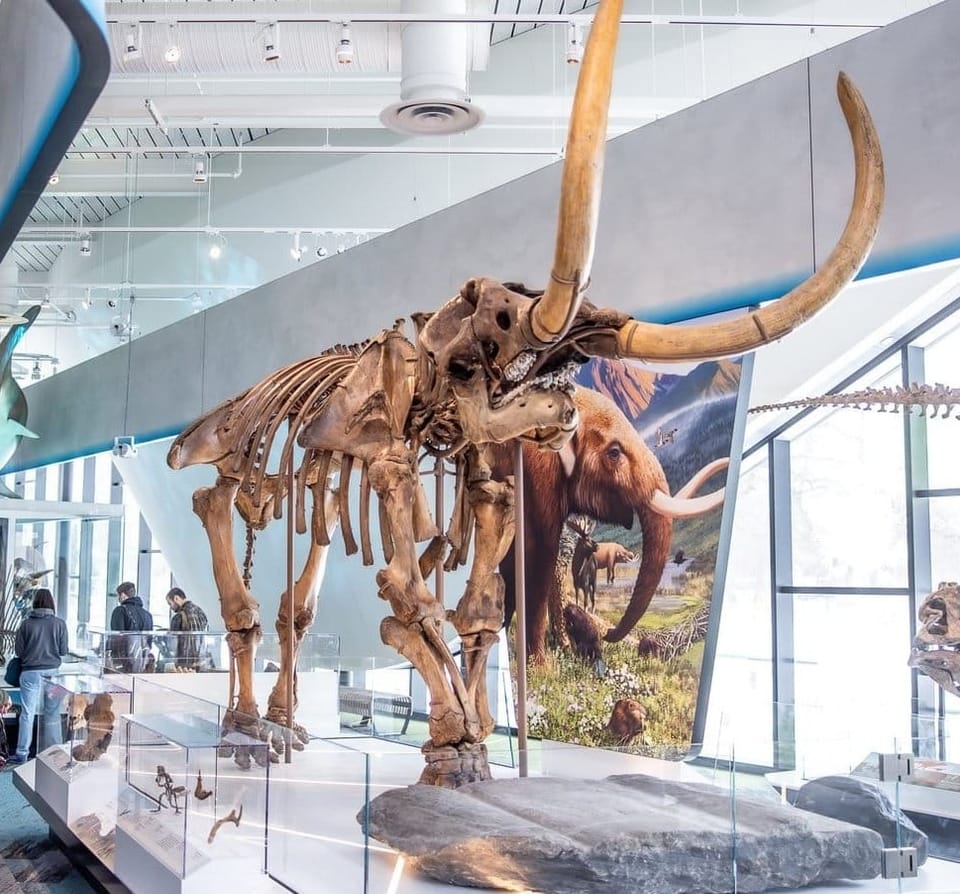
The heroic sled dog Balto, who raced across Alaska in 1925 to deliver life-saving diphtheria medicine to Nome, is here. So is Dunkleosteus, affectionately known as "Dunk," a prehistoric armored fish so formidable it makes modern predators look tame. Discovered in 1954 by a team that included three high school students, Happy the Haplocanthosaurus is the only adult of its species ever found complete enough to display.
Then there is Lucy. Approximately 3.2 million years old, the fossilized remains of Australopithecus afarensis were discovered in Ethiopia in 1974 and remain one of the most significant finds in human origins research. Her exhibit features a startlingly realistic figure crafted by paleo artist John Gurche, one of the world's foremost interpreters of human ancestors, and it stops you cold. You’ll find yourself looking into her face and feeling the full, strange weight of time.
A Museum Transformed
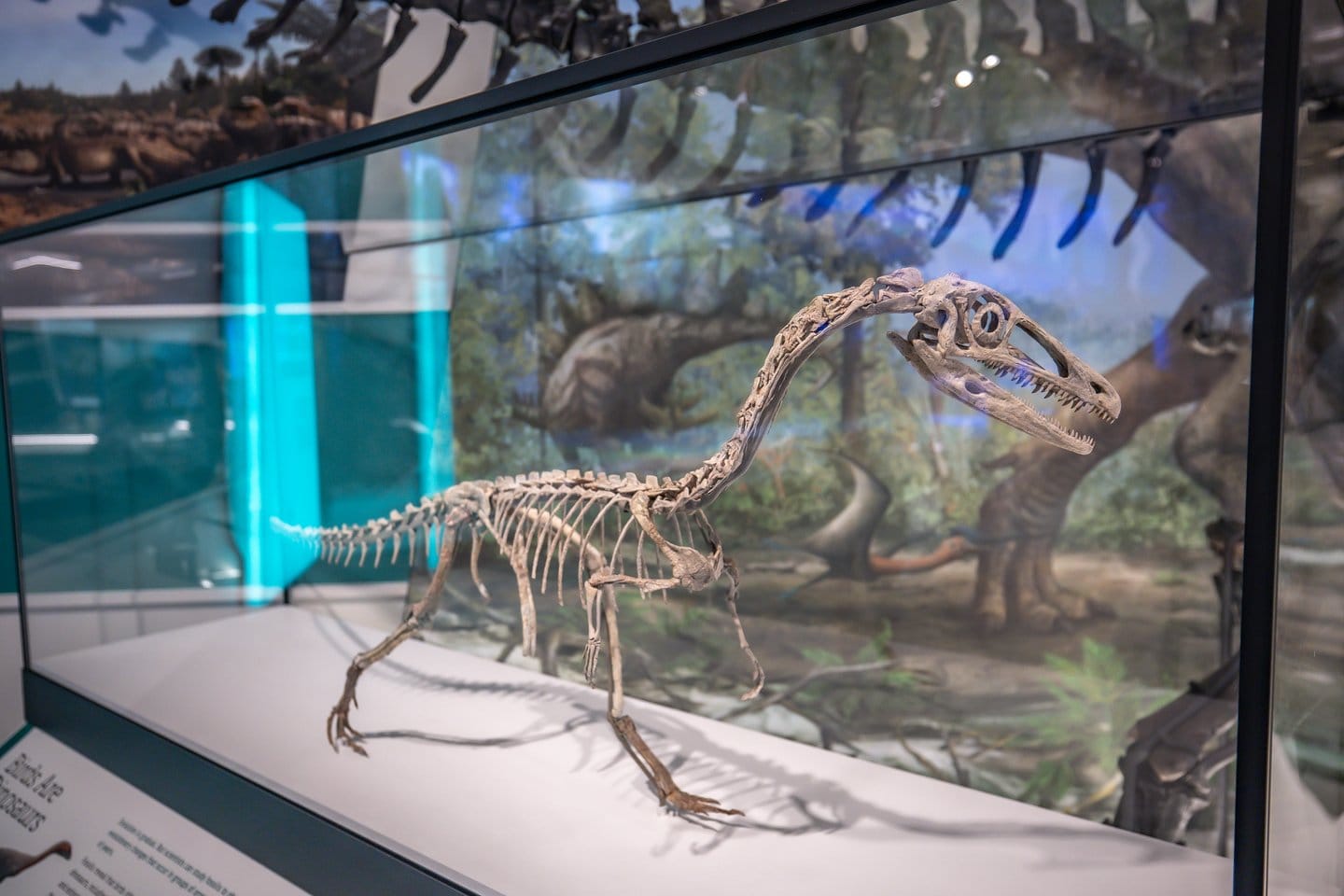
The 2024 renovation reimagined what a natural history museum can be. The Douglas McCreery and Dr. Laurie McCreery Timeline of the Earth stretches through the museum, with each inch corresponding to a million years of planetary history. It carries you from the planet's origins 4.6 billion years ago to the present day. Medallions along the way mark geological and biological milestones.
In the Larry Sears and Sally Zlotnick Sears Dynamic Earth Wing, immersive displays bring the fossil record to life, exploring the cycles that shaped our planet. Next, the Evolving Life Wing traces the evolution of life on Earth through interactive exhibits. Ohio's ecosystems take center stage in the Natural Areas Gallery, which highlights some of the 65 sites across northern Ohio that the Museum stewards through its Natural Areas Program. Since 1956, the program has grown to protect more than 12,000 acres across the region.
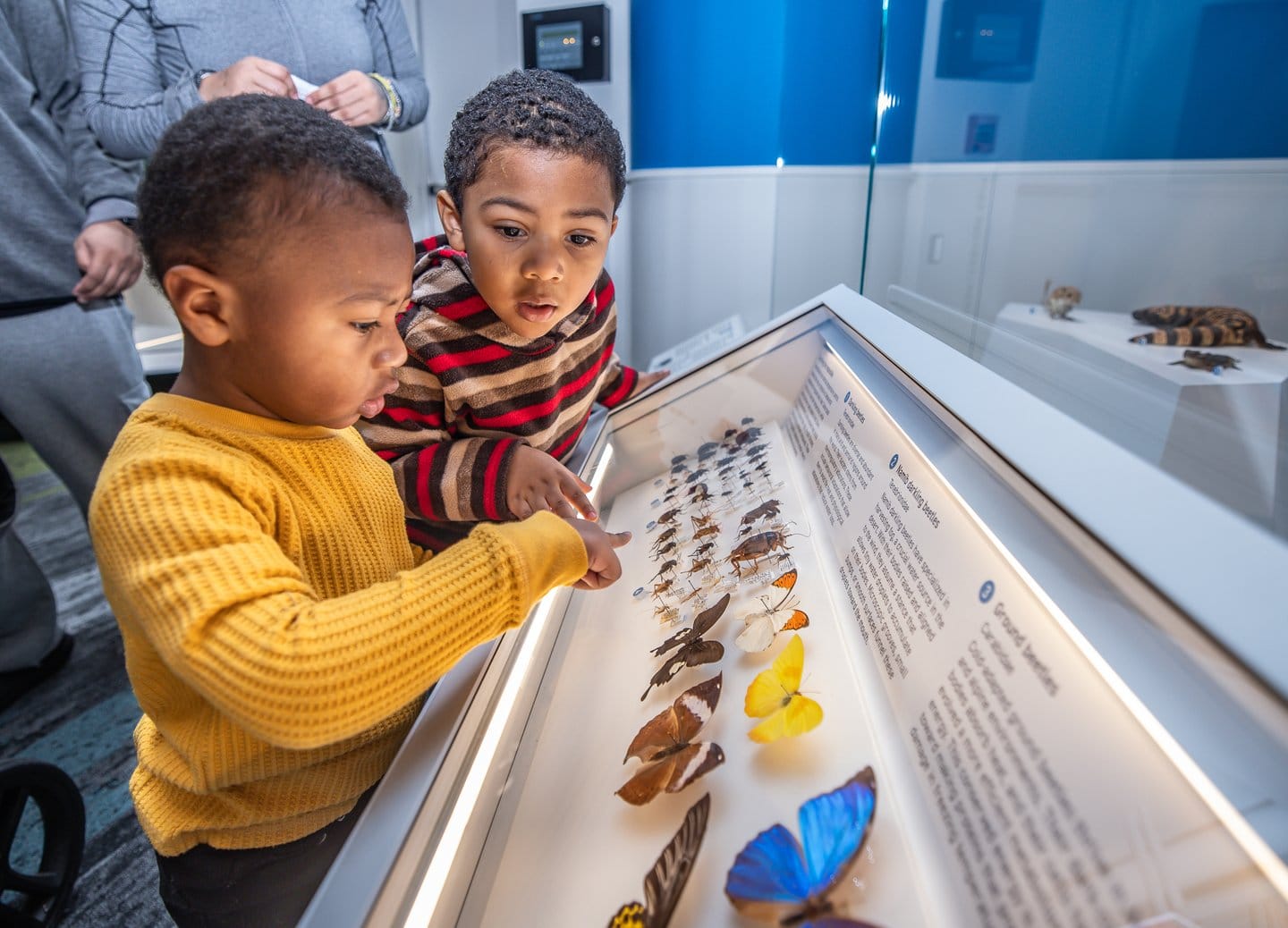
Hands-on discovery awaits at the Ames Family Curiosity Center, with interactive workstations, citizen science opportunities, and exhibits that answer questions while sparking new ones. More than 130 specimens fill the gems and minerals exhibit, including naturally colored diamonds, Mississippi River pearls, opals, and pieces of geologic history collected by Cleveland industrialist Jeptha Homer Wade II. A Moon rock on long-term loan from NASA, gathered by Apollo 12 astronauts in 1969, rounds out the collection. It is kept in a controlled environment to prevent it from reacting with our atmosphere.
Reach for the Stars
The Nathan and Fannye Shafran Planetarium takes visitors on cosmic journeys across the Solar System and beyond through state-of-the-art Digistar 7 software, led by the Museum's own astronomers in live, interactive programs. The building itself is worth a long look. Its metallic exterior is embedded with tiny lights that catch and scatter like stars. Its roofline is angled toward Polaris, the North Star, the same celestial anchor that has guided human travelers for centuries.
The Ralph Mueller Observatory houses a 10½-inch refracting telescope built in 1899. In 2003, when Mars swung closer to Earth than it had in 50,000 years, the telescope drew a crowd of more than 750 visitors in a single night.
Outside, the Ralph Perkins II Wildlife Center and Woods Garden is home to native Ohio animals, each a rescued creature that could not be safely returned to its natural habitat. Living at the Museum, they offer visitors a face-to-face encounter with the wild that no exhibit can fully replicate.
Good to Know
The Museum is open Tuesday through Sunday, 10 a.m. to 5 p.m., at 1 Wade Oval Drive in Cleveland’s University Circle neighborhood. Residents of Cleveland, East Cleveland, Brooklyn, Euclid, Garfield Heights, Maple Heights, and Warrensville Heights can visit for free on Saturdays and Sundays through the Mandel Community Days program. Just reserve tickets online in advance and bring proof of residency. Whether you’re drawn by Lucy’s ancient gaze, the sweep of the new galleries, or the pleasure of spending a day in one of the Midwest’s great institutions, the Cleveland Museum of Natural History delivers.