
Discovering Charleston's Timeless Charm
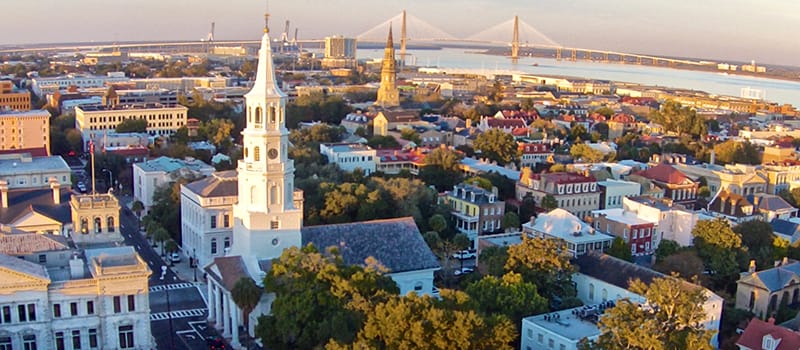
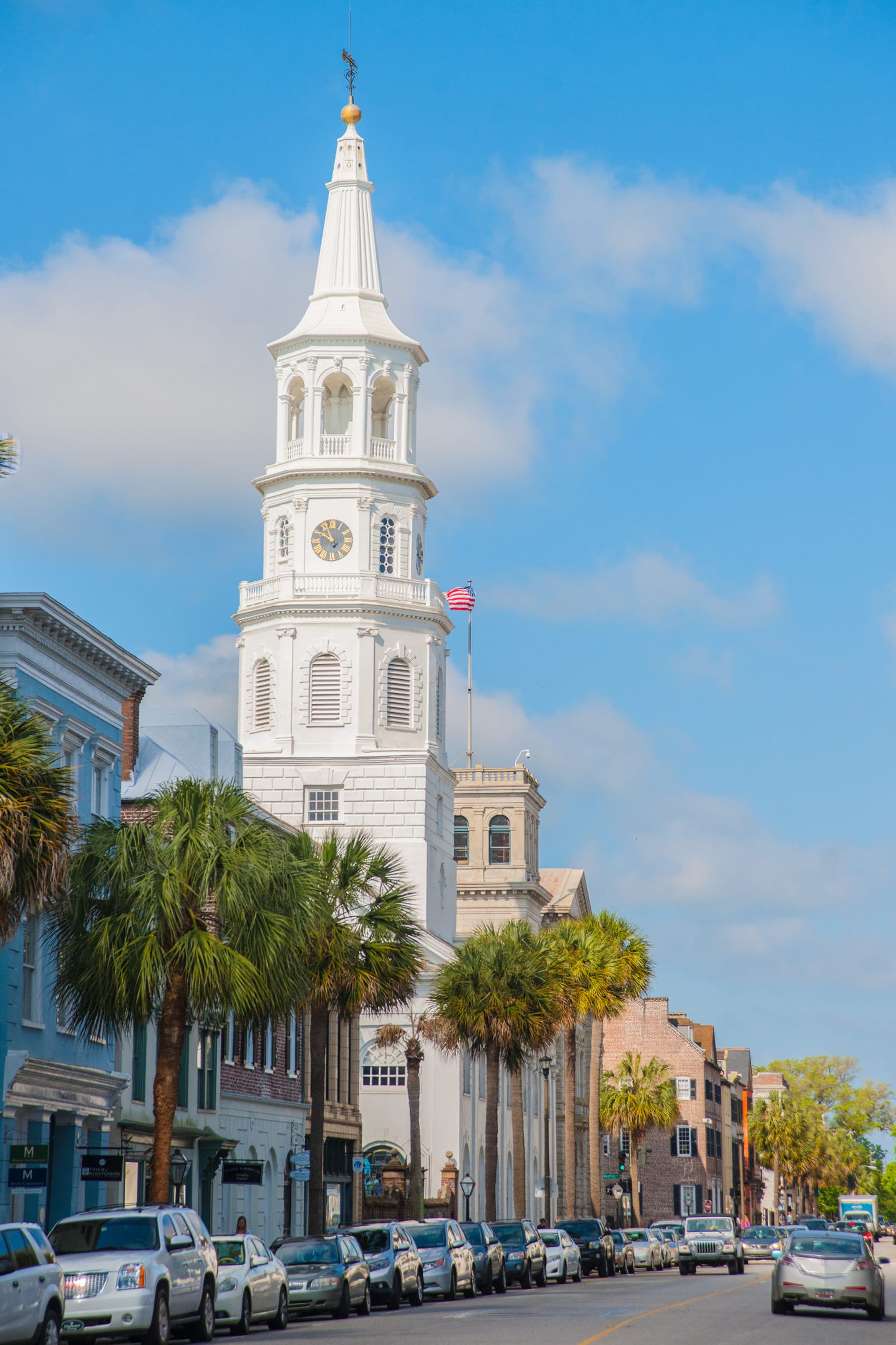
Charleston beckons with an irresistible blend of Southern hospitality and architectural splendor. Known affectionately as the Holy City from the numerous church spires that define its skyline, this South Carolina coastal city has a rich history spanning over three centuries.
Founded in 1670 as Charles Town to honor King Charles II, Charleston has weathered storms both literal and figurative to emerge as South Carolina's crown jewel. Positioned where the Ashley and Cooper Rivers meet the Atlantic, the city's peninsular setting creates a natural harbor that shaped its destiny.
Charleston's colonial roots run deep, established by English settlers who were soon joined by French, Scottish, Irish, and German immigrants. This cultural melting pot created a unique Southern identity evident in everything from the architecture to the cuisine. By the mid-1700s, Charleston had become a prosperous port city, and this wealth funded the elegant mansions and public buildings that continue to captivate visitors today.
The city's compact historic district offers several must-see attractions that showcase its architectural beauty and fascinating history.
King Street
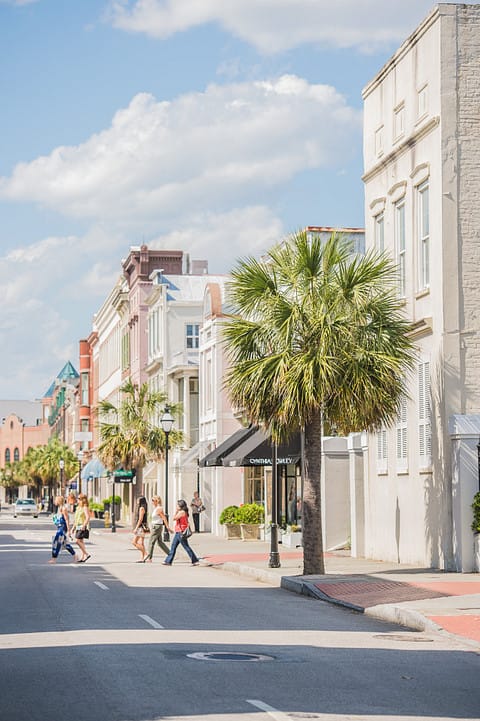
King Street serves as Charleston's main shopping corridor and has earned recognition as one of the country's top shopping destinations. This historic thoroughfare runs through the heart of downtown, offering an impressive mix of local boutiques, national retailers, antique shops, and art galleries all within easy walking distance.
The street features everything from luxury brands and designer fashions to unique Charleston-made goods and locally crafted items. Shoppers can explore high-end stores at Charleston Place or discover one-of-a-kind treasures in the many independent boutiques that line the street.
Charleston has developed into a major culinary destination, and King Street reflects this growth with restaurants ranging from casual spots to nationally recognized establishments. The dining scene includes both traditional Lowcountry dishes and contemporary cuisine, making it easy to find good food while exploring the historic district.
Rainbow Row
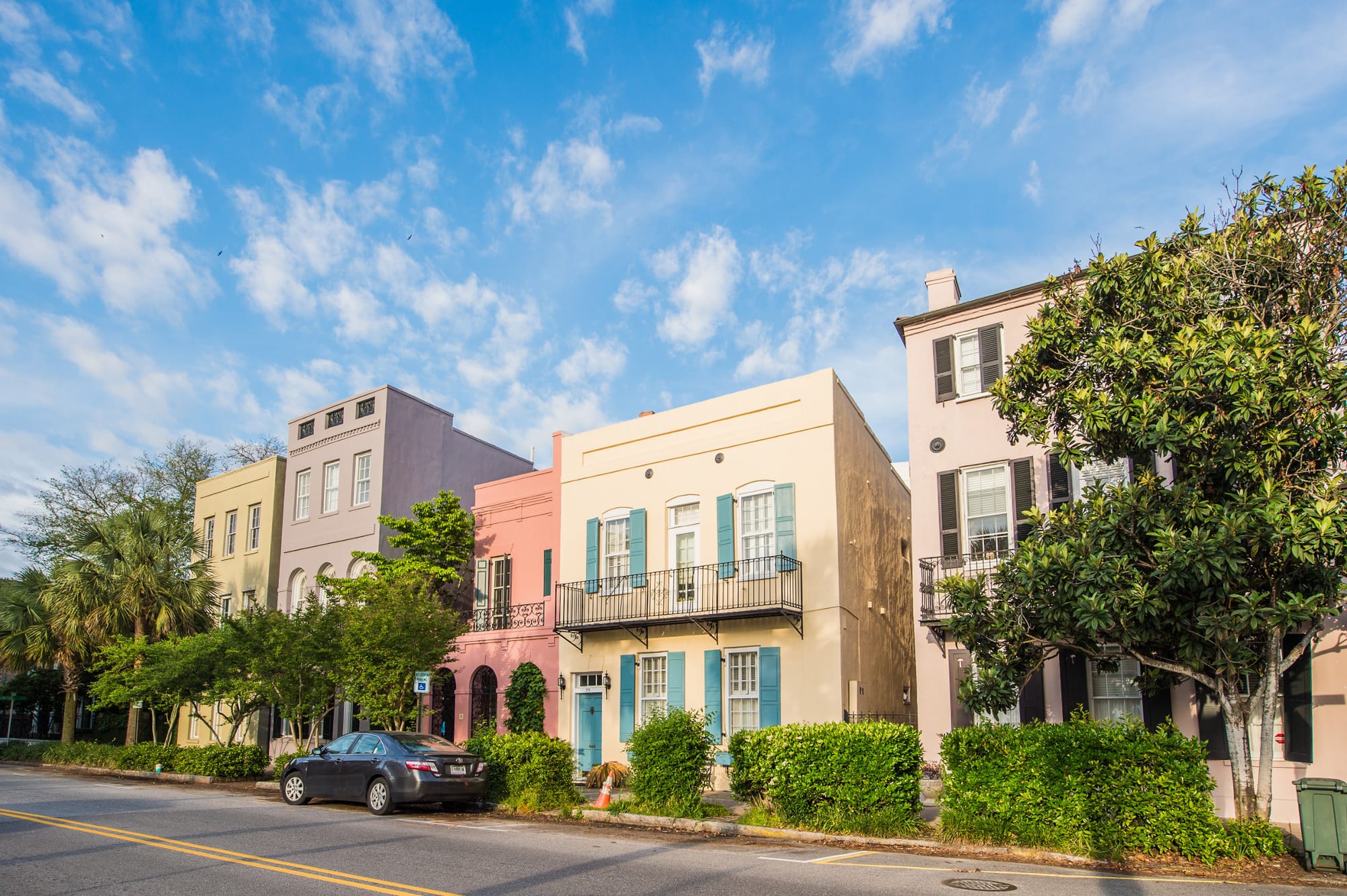
No visit to Charleston is complete without experiencing the enchanting streetscape of thirteen adjoining Georgian townhouses constructed in the late 1700s. These pastel-colored homes create one of America's most photographed streets.
The story behind these charming facades is one of determination and vision. When deterioration threatened these architectural treasures in the early 1900s, preservationist Susan Pringle Frost refused to let them disappear. Her restoration efforts in the 1920s and 1930s returned the buildings to their former beauty, creating the beloved landmark we see today.
These historic homes once served as the commercial heart of the waterfront district, functioning as both warehouses and residences. Today, they house boutiques, galleries, and private homes. The 1931 designation as a National Historic Landmark ensures these treasures will remain protected.
Waterfront Park
Waterfront Park represents one of Charleston's successful transformation projects. This fourteen-acre green space along Charleston Harbor was once the site of abandoned wharves and shipping terminals that fell into decay after the Civil War as the city's shipping industry declined.
The transformation began in 1975 under Mayor Joseph P. Riley Jr. After a devastating 1955 fire left the area in ruins, the city embarked on an ambitious restoration project that took years of careful planning and community support.
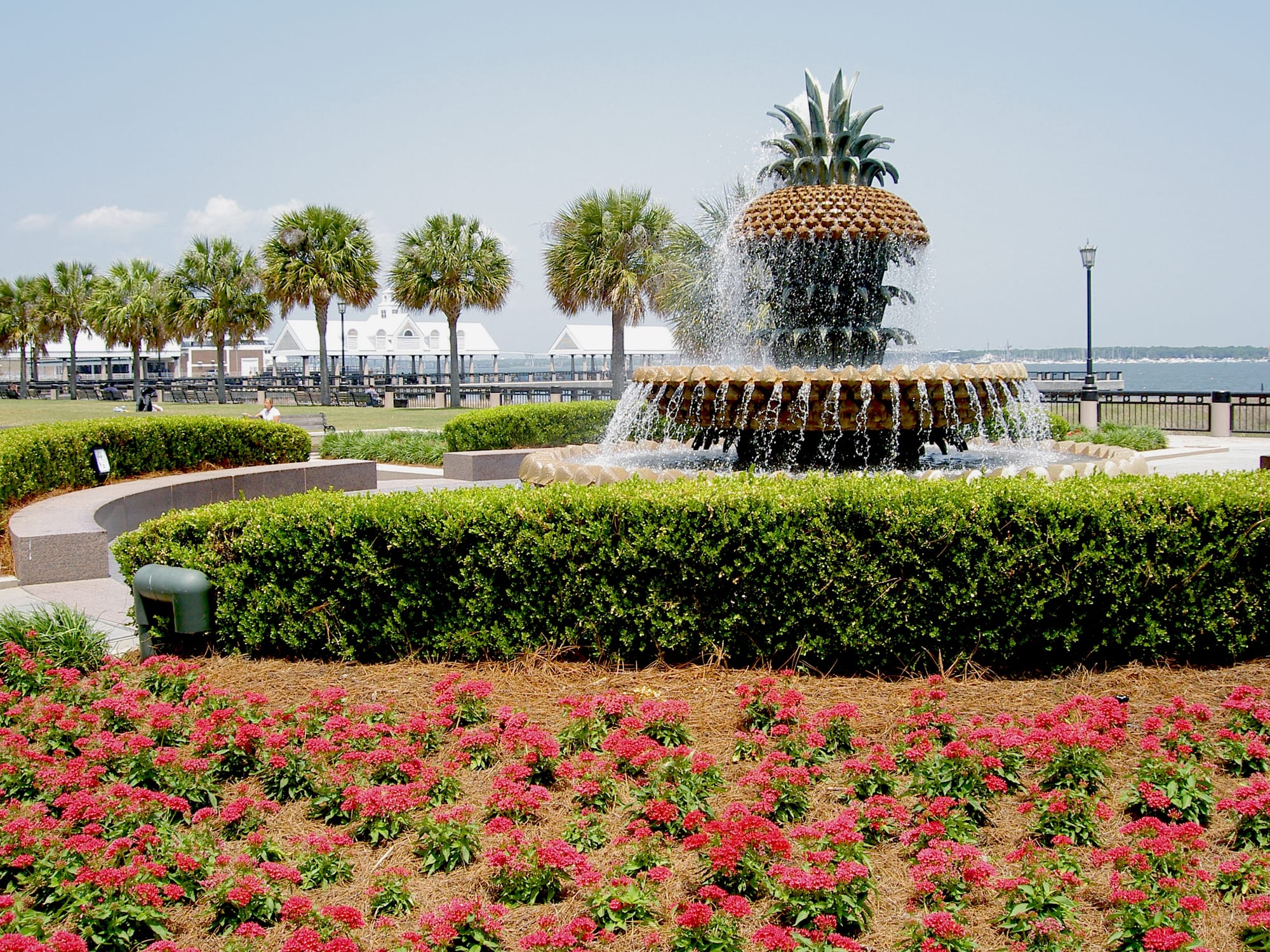
Today, this park offers shaded walkways beneath towering live oaks and palmetto trees, with comfortable benches positioned for watching boats drift along the Cooper River. The centerpiece is the distinctive Pineapple Fountain that has become Charleston's symbol of hospitality and renewal.
The pineapple itself tells a fascinating story of old-world luxury. These exotic fruits were so rare and expensive in colonial times that displaying one demonstrated both wealth and gracious hospitality. The fountain's opening after Hurricane Hugo added layers of meaning about resilience and community spirit.
On warm days, visitors are welcome to wade in the fountain's pool – a cooling break from Charleston's heat. A nearby splash fountain provides additional relief for families.
Charleston City Market
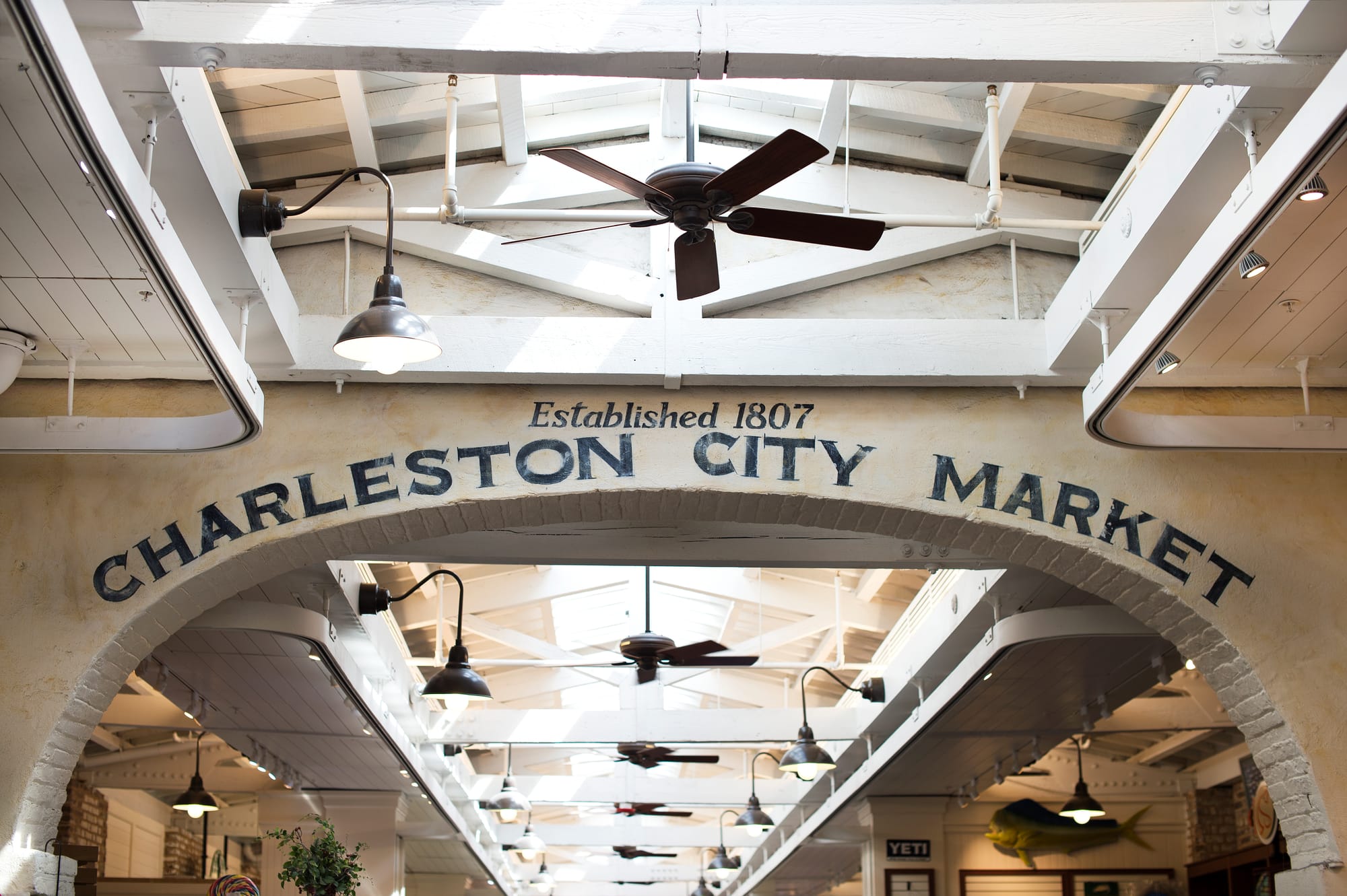
Charleston's historic marketplace spans four blocks and has hosted buyers and sellers for more than two centuries. This survivor has weathered civil war, earthquakes, hurricanes, and fire, emerging each time more resilient than before.
The market's origins trace back to the 1790s when Charles Cotesworth Pinckney, a signer of the U.S. Constitution, donated the land that once held a creek connecting Charleston's two rivers. After fire destroyed the original structures in 1838, the city rebuilt with the elegant Market Hall and four long sheds that define the space today.
Look closely at Market Hall's exterior decorations, and you'll spot carved ox and ram heads – stone reminders of the market's agricultural heritage when meat, fish, and fresh produce filled the stalls. The building's upper floors served as meeting spaces for everything from Confederate recruiting during the Civil War to community gatherings and celebrations.
While meat and vegetables no longer dominate the offerings, the market maintains its commercial spirit with artisans, food vendors, and craftspeople. The most treasured items are the intricate sweetgrass baskets woven by Gullah-Geechee artisans whose ancestors brought this West African tradition to the Carolina lowcountry. Watching these skilled hands create functional art connects visitors to generations of cultural preservation.
Planning Your Charleston Adventure
Spring and fall offer the most comfortable weather for exploring, though Charleston's mild winters provide a lovely escape from harsher northern climates. Summer brings heat and humidity, but also longer days for enjoying waterfront breezes.
Consider staying in the historic district to maximize your walking opportunities and minimize transportation needs. Many accommodations occupy converted historic buildings, adding another layer to your Charleston experience. The compact historic district is perfect for exploring on foot, or you can take a horse-drawn carriage tour for a more leisurely way to see the sights.
The city's dedication to architectural preservation creates endless photographic opportunities throughout the historic district. For more information about Charleston attractions, visit www.scprt.com.