Unbridled Beauty: The Wild Horses of Assateague Island
Discover a Unique Beach Destination with Beautiful Horses and Untouched Atlantic Coastline in Maryland and Virginia
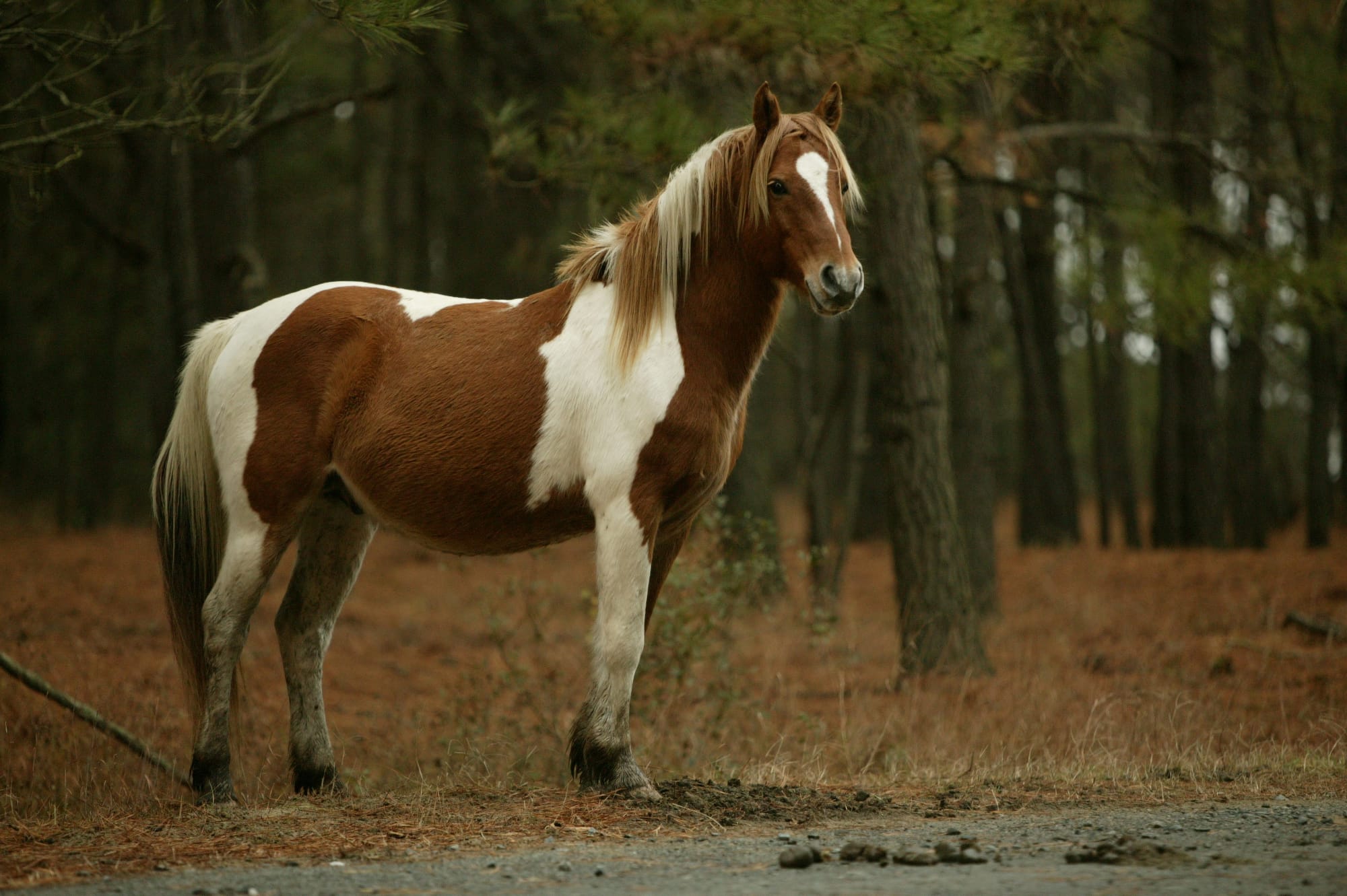
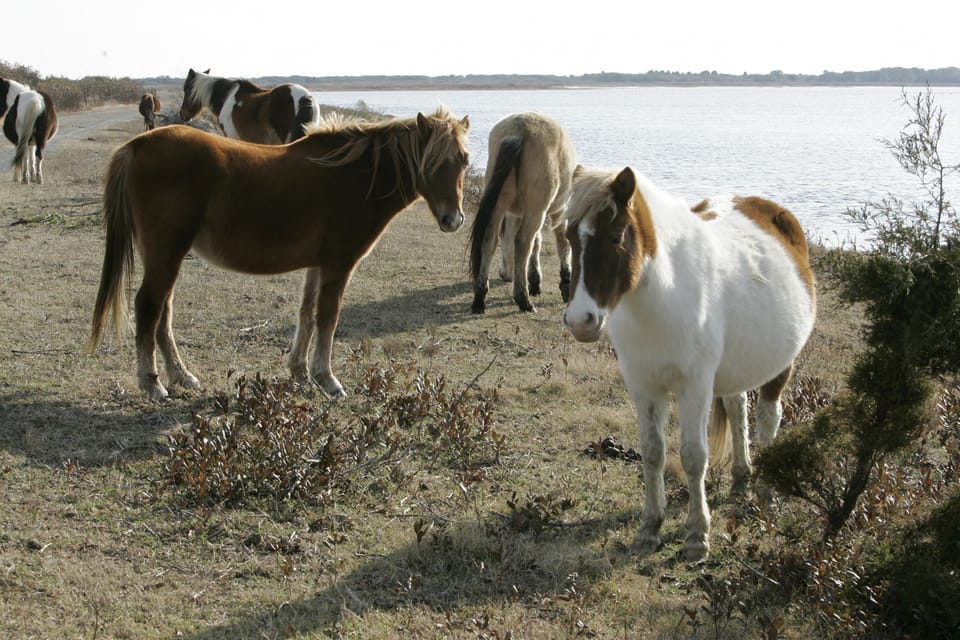
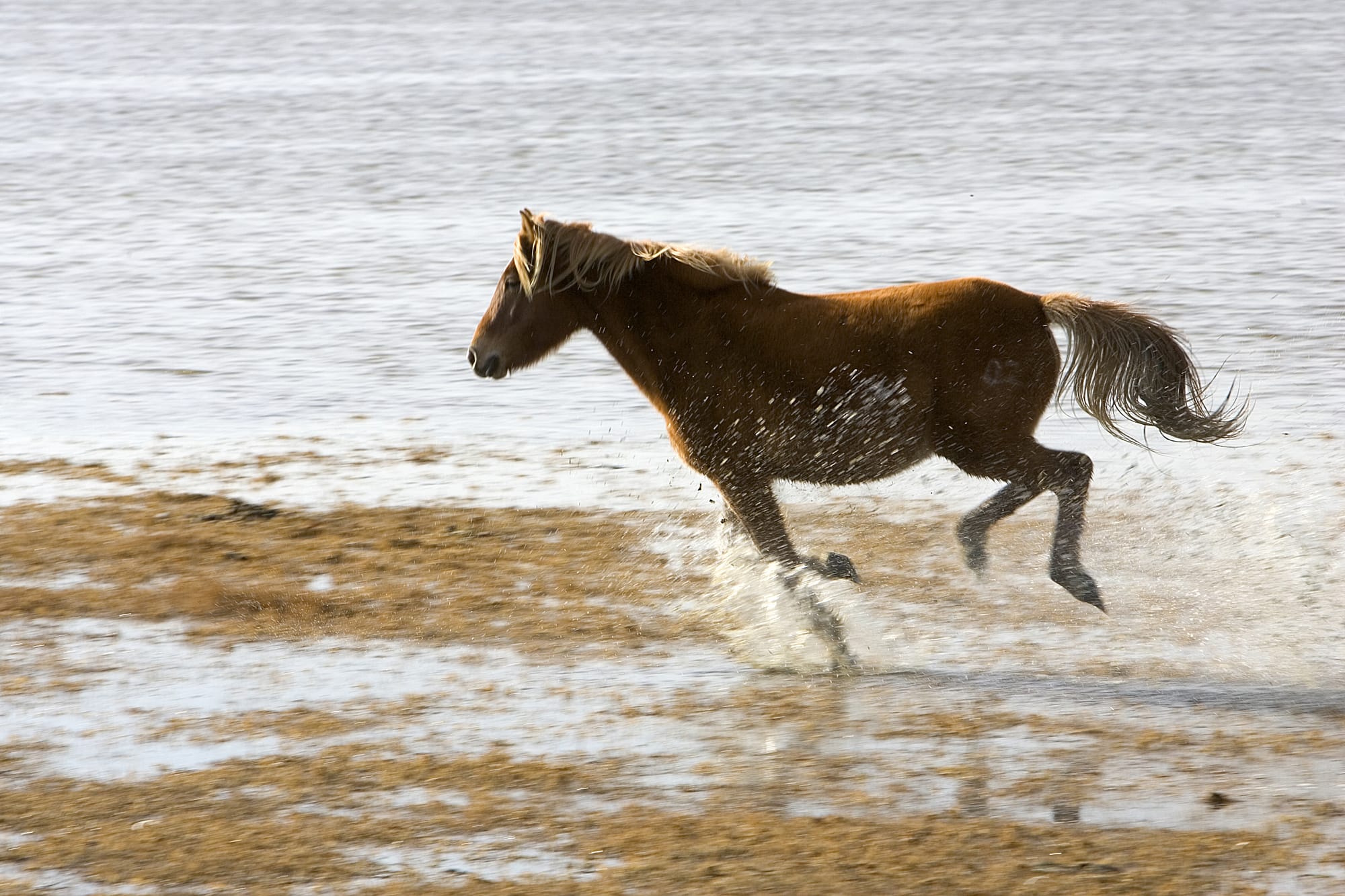
Small bands of horses roam freely across Assateague Island’s beaches, marshes, and dunes, their manes whipping in the Atlantic wind. These iconic animals have survived on this 37-mile barrier island for more than 300 years, adapting to hot summers, relentless mosquitoes, hurricane-force winds, and sparse vegetation in sandy soil and salt spray. Watching them graze along the shoreline or trot across wind-sculpted dunes offers a rare glimpse of horses living wild in North America.
The horses aren’t technically wild; they’re feral, meaning domestic animals that have returned to living in nature. Local legend claims they swam ashore from a colonial-era shipwreck, a romantic story never verified by historical documentation. Evidence suggests a more practical origin: mainland farmers brought livestock, including horses, to Assateague as early as 1669 to escape fencing regulations and taxes. Their descendants have been here ever since.
Two Herds, Two States
The Maryland-Virginia border runs through Assateague, and a fence along this line divides the island’s horses into two separate populations. The Maryland herd, managed by the National Park Service, roams the northern portion of the island within Assateague Island National Seashore. The Virginia herd lives on Chincoteague National Wildlife Refuge and is owned by the Chincoteague Volunteer Fire Company, which maintains approximately 150 adult horses under a special use permit from the U.S. Fish and Wildlife Service.
Each herd organizes into groups ranging from a pair to a dozen horses, typically led by a dominant mare with a stallion who protects the group. These bands establish home ranges they return to repeatedly, creating a complex social structure that visitors can observe if they watch carefully and from a safe distance.
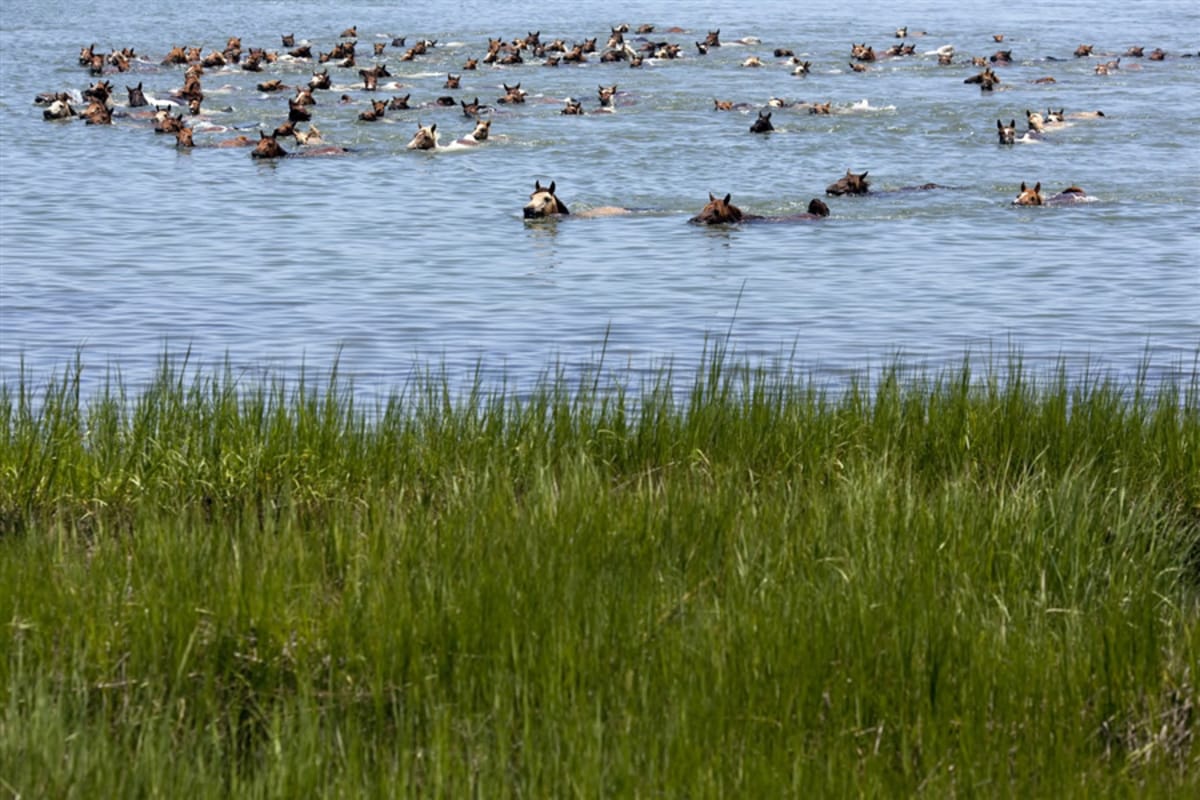
The Virginia herd gained fame through Marguerite Henry’s 1947 children’s book Misty of Chincoteague, which tells the story of a wild pony captured during the annual Pony Penning event. This tradition continues every year on the last Wednesday of July, when “Saltwater Cowboys” round up the Virginia horses and guide them through the channel separating Assateague from Chincoteague Island. The next day, most foals are auctioned to benefit the Chincoteague Volunteer Fire Department while keeping the herd at a sustainable size. The event draws thousands of spectators who line the shores to watch the horses swim.
Viewing Safely
Assateague’s horses may look docile while grazing, but they remain wild animals with unpredictable behavior. Federal law prohibits approaching, touching, or feeding them, and rangers strictly enforce these regulations for good reason. Horses bite and kick when they feel crowded or when competing for food. Stallions protecting their bands can be particularly aggressive. Every year, visitors suffer injuries from getting too close—bites, kicks, and being knocked down by horses that spook suddenly.
Feeding horses causes problems that go far beyond immediate danger. Horses that learn to approach cars and people for food often become aggressive over time, endangering future visitors. They gather near roads where they’re frequently struck and killed by vehicles. Human food makes them sick. Horses conditioned to beg will grab objects from visitors, tear into tents, and destroy property while searching for snacks.
The best photographs and most memorable encounters happen when visitors give horses the space they need to behave naturally. Bring binoculars or a telephoto lens and watch from your vehicle or at least 40 feet away on foot. The Maryland district’s Beach Road and the Virginia district’s Wildlife Loop provide excellent opportunities to observe horses from your car. Early morning and late afternoon offer the best light for photography and the most active horse behavior.
Beyond the Horses
While horses draw most visitors to Assateague, the island offers much more. Thirty-seven miles of beach provide space for swimming, sunbathing, and beachcombing. The Maryland district maintains developed beaches with lifeguards during summer, while the Virginia district offers more remote stretches of sand. Both paved and unpaved trails wind through different habitats: maritime forest, salt marsh, and dune systems, where hikers encounter a remarkable diversity of birds, including great blue herons, snowy egrets, and piping plovers.
Surf fishing attracts anglers year-round, with striped bass, bluefish, and flounder running seasonally. Crabbing in the bay waters proves productive during summer months. The Maryland district offers drive-in and walk-in camping, while the Virginia district provides overflow camping on select dates. Backcountry camping permits allow experienced hikers to explore more remote areas of the Maryland district.
Barrier island hiking presents unique challenges. Walking on sand requires much more effort than hiking on packed trails, and distances are deceptive with few landmarks. Summer brings extreme heat, humidity, and abundant biting insects: mosquitoes, greenhead flies, and ticks. Pack insect repellent, sunscreen, a hat, and plenty of water for any outdoor activities. Lightweight long-sleeved shirts provide protection from both sun and insects. Check tide schedules before hiking, as high tide pushes you into soft sand higher on the beach, making progress exhausting. Sudden thunderstorms can develop quickly; monitor weather forecasts and seek shelter if storms approach.
Planning Your Visit
Assateague Island straddles Maryland and Virginia with no vehicle access between the two districts. Visitors must return to the mainland to reach either entrance. The Maryland entrance sits just south of Ocean City, Maryland, while the Virginia entrance requires driving through the town of Chincoteague, Virginia.
The Maryland district operates year-round, 24 hours a day. The Assateague Island Visitor Center at 11800 Marsh View Lane in Berlin, Maryland, opens daily from 9:00 AM to 4:00 PM (closed Thanksgiving and Christmas). The center features marine aquariums, a touch tank, exhibits about island ecology and wild horses, and a bookstore.
The Virginia district maintains seasonal hours: 6:00 AM to 6:00 PM in winter and 5:00 AM to 10:00 PM in summer. The Herbert H. Bateman Educational and Administrative Center at 8231 Beach Road in Chincoteague opens Thursday through Sunday from 10:00 AM to 4:00 PM with historical exhibits, natural history displays, and ranger programs.
Entrance fees apply at both districts. Most of Maryland’s portion operates as Assateague Island National Seashore (National Park Service), while a two-mile section functions as Assateague State Park. The Virginia district operates as Chincoteague National Wildlife Refuge (U.S. Fish and Wildlife Service), with National Park Service facilities at the beach and visitor center.
Bring food and water, as purchasing options on the island are extremely limited. Public water fountains exist at visitor centers, but plan to be self-sufficient. Visit www.nps.gov for the National Park Service areas or www.fws.gov for the wildlife refuge. For Pony Penning dates and information, contact the Chincoteague Chamber of Commerce at www.chincoteaguechamber.com.